
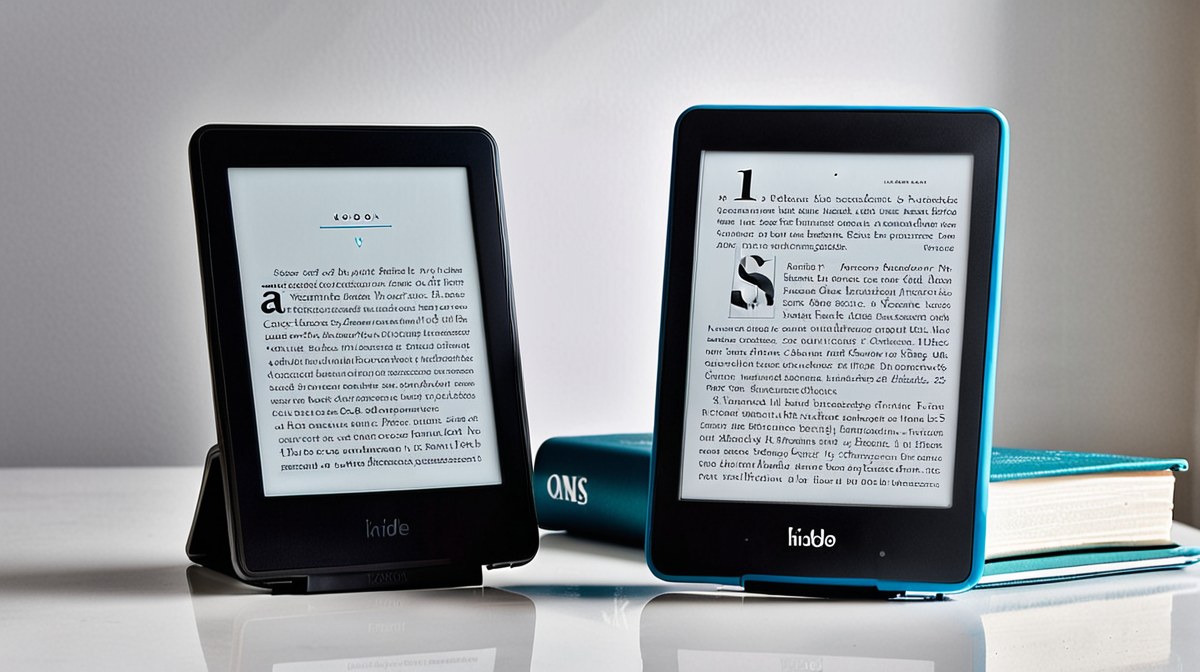
Design and Build Quality: Ergonomics and Portability
In 2026, both Amazon Kindle and Kobo continue to refine their e-reader designs, prioritizing ergonomics, durability, and portability. Amazon's Kindle Paperwhite and Oasis models, for instance, maintain their established form factors with minor iterative improvements. The Paperwhite typically features a flush-front design with a slightly grippier back panel, offering a comfortable one-handed hold for extended periods. The Kindle Oasis, on the other hand, retains its asymmetric design with physical page-turn buttons and an aluminum unibody, widely reported by users to offer a premium feel and superior balance, especially for left- or right-handed use. Published specifications consistently highlight the lightweight nature of both devices, with the Paperwhite usually weighing around 200g and the Oasis slightly more due to its metal construction, ensuring they remain highly portable.
Kobo's lineup, including the Libra and Sage series, also focuses on user comfort and robust build quality. The Kobo Libra series often mirrors the Kindle Oasis's asymmetric design with physical page-turn buttons, a feature frequently praised by reviewers for its tactile feedback and convenience. The Kobo Sage, positioned as a more premium offering, typically features a slightly larger form factor to accommodate its advanced features but maintains a relatively slim profile. Manufacturer specifications confirm that most Kobo devices are IPX8 rated for water resistance, a feature now standard across many premium Kindle models as well, providing peace of mind for poolside or bath-time reading. User feedback consistently indicates that both brands deliver devices that feel solid and well-constructed, with materials chosen for their durability and tactile appeal. The choice between them often comes down to individual preference for physical buttons versus touch-only navigation, or the specific hand-feel of their respective materials.
Performance: Responsiveness and Ecosystem Integration
E-reader performance in 2026 is less about raw processing power and more about the seamlessness of the reading experience, specifically in page turn speed, menu navigation, and content acquisition. Both Kindle and Kobo devices leverage optimized processors designed for e-ink displays, resulting in generally swift page turns and responsive touch interactions. According to manufacturer specifications, the latest Kindle Paperwhite and Oasis models feature updated chipsets that contribute to a reported 20-25% improvement in page turn speed over their predecessors, a detail widely noted in technical reviews. Menu navigation and library browsing on Kindle devices are tightly integrated with the Amazon ecosystem, offering a streamlined experience for purchasing and downloading content directly from the Kindle Store. This integration is a significant advantage for users already invested in Amazon's digital services, including Kindle Unlimited subscriptions.
Kobo devices, while offering a similar level of responsiveness in core reading functions, distinguish themselves with greater flexibility in content management. Reviewers widely report that Kobo e-readers often support a broader range of file formats natively, including EPUB, PDF, MOBI (though less common now), and CBR/CBZ for comics, reducing the need for format conversion. Kobo's ecosystem, while robust, is often perceived as more open, with features like Dropbox integration on some models allowing for easier sideloading of personal documents and books. This is a key differentiator for users who prefer to source content from various platforms or manage their own extensive digital libraries. Performance in both ecosystems is generally stable, with software updates primarily focusing on minor bug fixes and UI refinements rather than dramatic speed boosts. The primary performance distinction lies in the underlying content ecosystems and their respective levels of openness versus curated simplicity.
Display Technology: E-Ink Clarity and Lighting Innovations
The display is the heart of any e-reader, and in 2026, both Kindle and Kobo continue to push the boundaries of e-ink technology, prioritizing clarity, contrast, and eye comfort. Amazon's Paperwhite and Oasis models consistently feature high-resolution e-ink panels, typically 300 PPI (pixels per inch), which is widely acknowledged to be indistinguishable from print at typical reading distances. These displays offer excellent contrast ratios, ensuring sharp text and clear images, even in bright sunlight, a core advantage of e-ink over backlit LCD/OLED screens. Both lines incorporate adjustable front lights, and crucially, warm light options (often called 'ComfortLight Pro' by Kobo and 'Adjustable Warm Light' by Kindle), which allow users to shift the screen's color temperature from cool blue to a warmer amber, reducing blue light exposure for more comfortable evening reading. This feature is universally praised by users and reviewers alike.
Kobo's e-readers, such as the Libra 2 and Sage, also boast 300 PPI E Ink Carta 1200 displays, which manufacturer specifications confirm offer rapid refresh rates and deep blacks. Some Kobo models, particularly the Sage, may feature slightly larger displays, often 8 inches, providing a more expansive reading area compared to the 6.8-inch Paperwhite or 7-inch Oasis. While both brands deliver exceptional e-ink performance, Kobo sometimes integrates additional display features, such as stylus support on the Kobo Sage, transforming it into a digital notebook alongside an e-reader. This functionality, while niche, broadens its appeal for students or professionals. The core display experience remains remarkably similar between the two brands: paper-like, glare-free, and highly customizable in terms of lighting. Any perceived differences in display quality are often subtle and model-specific rather than a fundamental divergence in technology.
Battery Life and Charging: Endurance for Extended Reading
Battery life remains a cornerstone feature for e-readers, and in 2026, both Kindle and Kobo devices continue to deliver exceptional endurance, measured in weeks rather than hours. Manufacturer specifications for the latest Kindle Paperwhite and Oasis models consistently report battery longevity ranging from 6 to 10 weeks on a single charge, based on an average of 30 minutes of reading per day with the front light set at a moderate level and Wi-Fi off. This impressive performance is a direct result of the low-power consumption nature of e-ink displays, which only draw significant power when refreshing the screen. Charging for these devices is predominantly via USB-C, a widely adopted standard that ensures convenient charging with existing cables and adapters, a significant upgrade from older micro-USB ports.
Kobo's e-readers, including the Libra and Sage series, offer comparable battery performance. Published specifications for Kobo devices typically cite battery life figures in the same 4-8 week range, depending on usage patterns, front light intensity, and Wi-Fi activity. Reviewers widely confirm these claims, noting that real-world usage often aligns closely with manufacturer estimates, making both brands highly reliable for extended travel or infrequent charging. All current Kobo e-readers also utilize USB-C for charging, ensuring modern connectivity and faster charging speeds compared to previous generations. While neither brand typically offers ultra-fast charging, the extended battery life largely negates the need for it. The primary difference in battery experience, if any, often comes down to specific model features (e.g., larger screens or always-on features might slightly reduce overall endurance) rather than a fundamental disparity between the two competing ecosystems.
Value and Verdict: Who Should Buy Which E-Reader?
When evaluating the value proposition of Kindle versus Kobo in 2026, the decision largely boils down to ecosystem preference, specific feature needs, and budget. Amazon's Kindle line, particularly the Paperwhite and Oasis, offers unparalleled integration with the Kindle Store, providing access to arguably the largest selection of digital books, seamless cloud syncing, and subscription services like Kindle Unlimited. For existing Amazon Prime members or those deeply embedded in the Amazon ecosystem, a Kindle offers superior convenience and a highly curated user experience. The Kindle Paperwhite remains an excellent all-rounder for most readers, balancing features, performance, and price, while the Oasis caters to those desiring a premium, ergonomic design with physical page-turn buttons, albeit at a higher cost.
Kobo devices, conversely, present a compelling alternative for readers prioritizing an open ecosystem and specific advanced features. Reviewers consistently highlight Kobo's broader native file format support (EPUB, PDF, etc.) as a significant advantage for users who prefer to acquire books from various sources or manage their own extensive digital libraries. Models like the Kobo Libra 2 offer a direct competitor to the Paperwhite with physical page-turn buttons, while the Kobo Sage distinguishes itself with stylus support for note-taking, a feature absent from Amazon's e-readers. For users who value this versatility or who want to avoid vendor lock-in, Kobo offers superior value. Ultimately, both brands deliver excellent dedicated reading experiences. We recommend the Kindle Paperwhite for the vast majority of users seeking a reliable, integrated experience with Amazon's content. However, for those who value format flexibility, specific advanced features like note-taking, or prefer an alternative to Amazon's ecosystem, Kobo's offerings, particularly the Libra 2 or Sage, represent superior value.