
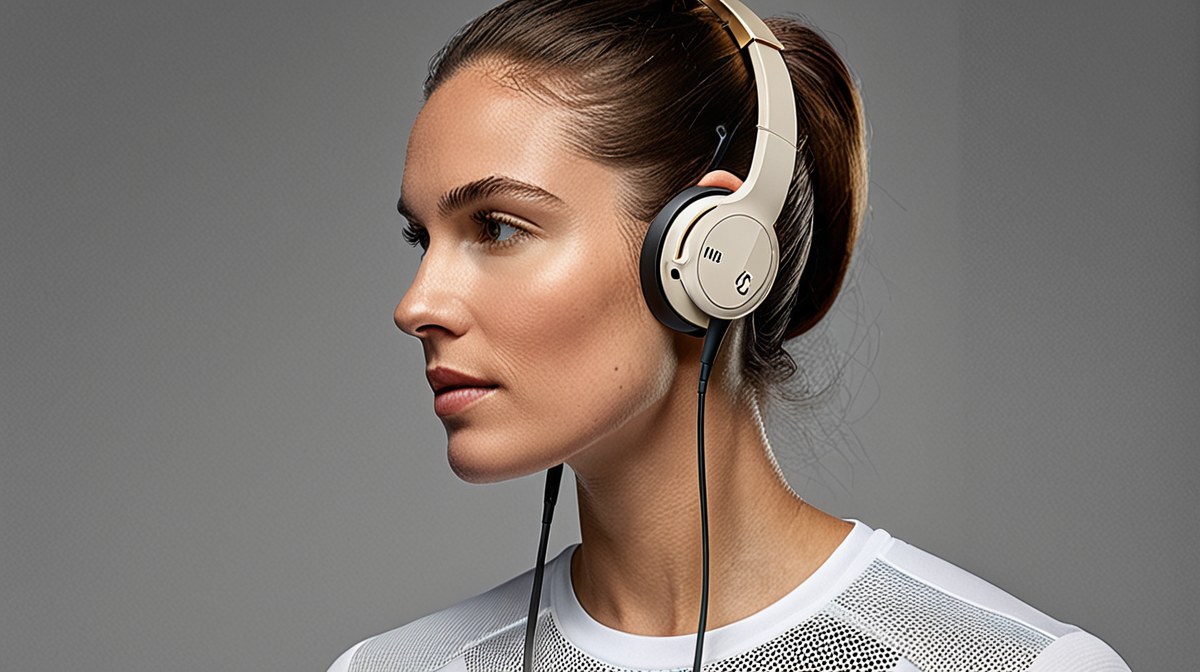
Design & Build Quality: Durability Meets Comfort
The design philosophy behind bone conduction headphones prioritizes lightweight durability and a secure, comfortable fit for active users. Manufacturers like Shokz (formerly AfterShokz) and Mojawa have consistently focused on materials such as titanium alloys for the band, which offer both flexibility and resilience against bending and twisting. According to published specifications, many 2026 models, including the anticipated Shokz OpenRun Pro 2, feature an IP67 or even IP68 rating, indicating robust resistance to dust and full immersion in water, making them suitable for swimming or harsh weather conditions. Reviewers widely note that the open-ear design, which rests the transducers on the cheekbones, eliminates the discomfort and ear fatigue often associated with in-ear headphones or the bulk of over-ear models. The weight of these devices typically hovers around 25-30 grams, ensuring they are barely noticeable during long runs or bike rides. However, some users with larger or smaller head sizes occasionally report minor pressure points, though most brands offer some degree of adjustability. The form factor also means they can be worn comfortably with glasses or helmets, a significant advantage reported by cyclists and construction workers. Compared to traditional headphones, the lack of ear canal obstruction is a primary driver of their ergonomic appeal, allowing for a more natural feel and prolonged wear without irritation. The physical buttons for controls are often tactile and large enough for easy operation even with gloved hands, further enhancing their utility for outdoor sports.
Audio Performance: Clarity Over Bass Depth
Bone conduction technology inherently presents a trade-off in audio fidelity compared to traditional air-conduction headphones. In 2026, advancements in transducer technology, particularly with larger drivers and improved vibration patterns, have led to noticeable enhancements in mid-range clarity and overall volume. For instance, the Shokz OpenRun Pro (and its 2026 iteration, if released) reportedly incorporates 'TurboPitch' technology, which aims to deliver a more impactful bass response through core bass enhancers. However, reviewers widely note that while bass has improved, it still cannot match the deep, resonant bass produced by high-end in-ear monitors or over-ear headphones. The strength of bone conduction lies in its clear reproduction of vocals and podcasts, making spoken word content exceptionally intelligible. Sound leakage, where others can faintly hear your audio, remains a characteristic of the technology, especially at higher volumes; this is a physical limitation of the vibration method. On the other hand, the open-ear design provides unparalleled situational awareness, a feature consistently praised by users for safety during outdoor activities like running or cycling. Unlike noise-cancelling headphones, bone conduction actively keeps you connected to your environment, which is a critical safety feature. When comparing models like the Mojawa Mojo2 vs. the Shokz OpenComm 2, published specs indicate differences in frequency response ranges, with some newer models pushing slightly lower into the bass spectrum, though the perceived difference in real-world use is often subtle. The primary consideration for audio performance in this category is not audiophile-grade immersion, but rather functional, clear audio delivery that complements environmental awareness.
Connectivity & Features: Seamless Integration and Smart Capabilities
Modern bone conduction headphones are designed for seamless integration into an active lifestyle, primarily relying on Bluetooth connectivity. Most 2026 models, including leading offerings from Shokz and Haylou, are expected to feature Bluetooth 5.2 or 5.3, providing stable connections, extended range (up to 10-15 meters), and improved power efficiency. This advanced Bluetooth standard also contributes to lower latency, crucial for video consumption, though it's less critical for their primary use cases of music and calls during exercise. Multi-point connectivity is a widely reported feature, allowing users to pair with two devices simultaneously, effortlessly switching between a smartphone and a laptop for calls or media playback. Integrated microphones are standard, often featuring dual-mic noise cancellation for clearer voice calls, a feature particularly beneficial for outdoor use where wind noise can be a factor; the Shokz OpenComm 2 is specifically designed with a boom mic for enhanced call clarity. Control schemes typically involve physical buttons for power, volume, play/pause, and skipping tracks, which are preferred by active users over touch controls that can be unreliable with sweat or gloves. Some high-end models may incorporate internal storage for MP3 playback, allowing users to leave their phones behind, a key feature reported by swimmers. Companion apps, while not universally available, are increasingly offered by manufacturers to customize EQ settings, update firmware, and manage device settings, adding a layer of personalized control. While not as feature-rich as some smart earbuds, the focus remains on robust, reliable connectivity and essential controls for their intended use.
Battery Life & Charging: Endurance for the Long Haul
Battery life is a critical factor for bone conduction headphones, given their popularity among athletes and outdoor enthusiasts who require extended use without interruption. According to manufacturer specifications, most premium models in 2026, such as the Shokz OpenRun Pro, offer between 8 to 10 hours of continuous audio playback on a single charge. Some specialized models, like those from YouthWhisper or Mojawa, target even longer durations, with reported battery lives reaching 12-16 hours, catering to ultra-endurance athletes. Standby time is also impressive, often extending into several days or even weeks, ensuring the headphones are ready when needed without constant recharging. Charging typically occurs via a proprietary magnetic charging cable, which is convenient and helps maintain water resistance, though it can be a minor inconvenience if the cable is misplaced. Fast charging capabilities are becoming more common; for instance, the Shokz OpenRun Pro reportedly delivers 1.5 hours of playback from a 5-minute charge, a feature widely praised by users for its practicality. Full charge times usually range from 1 to 2 hours. While the battery capacity might seem smaller than some over-ear headphones, the efficient power consumption of bone conduction transducers allows for respectable endurance. Users widely report that the advertised battery life holds up well in real-world scenarios, making these headphones reliable companions for long workouts, commutes, or work shifts. The balance between lightweight design and substantial battery capacity is a testament to ongoing engineering refinements in this category.
Value & Verdict: A Niche, But Valuable, Proposition
The value proposition of bone conduction headphones in 2026 remains highly specialized: they are not designed to replace premium audiophile headphones but to offer a distinct, safety-conscious listening experience. Priced typically between $80 and $180 for reputable models like the Shokz OpenRun or the Mojawa Mojo2, they represent a considered investment. For individuals who frequently run, cycle, hike, or work in environments where hearing ambient sounds is crucial, the cost is justified by the enhanced safety and comfort. Reviewers consistently highlight the peace of mind derived from maintaining situational awareness as a primary benefit. However, for users whose primary concern is pure audio fidelity, particularly deep bass or noise isolation, the value diminishes, and traditional in-ear or over-ear headphones offer superior sonic performance at similar or lower price points. The durability and water resistance common to bone conduction models also contribute to their long-term value, as they are built to withstand demanding conditions. When comparing specific models, the Shokz OpenRun Pro (or its 2026 successor) consistently emerges as the benchmark for its balanced performance, comfort, and robust feature set. Alternatives like the Haylou PurFree BC01 offer competitive features at a slightly lower price, making them a strong contender for budget-conscious buyers who still prioritize open-ear listening. Ultimately, the verdict hinges on individual priorities: if situational awareness, extended comfort, and an active lifestyle are paramount, bone conduction headphones offer excellent value and a genuinely useful, distinct listening experience that no other headphone type can replicate.