
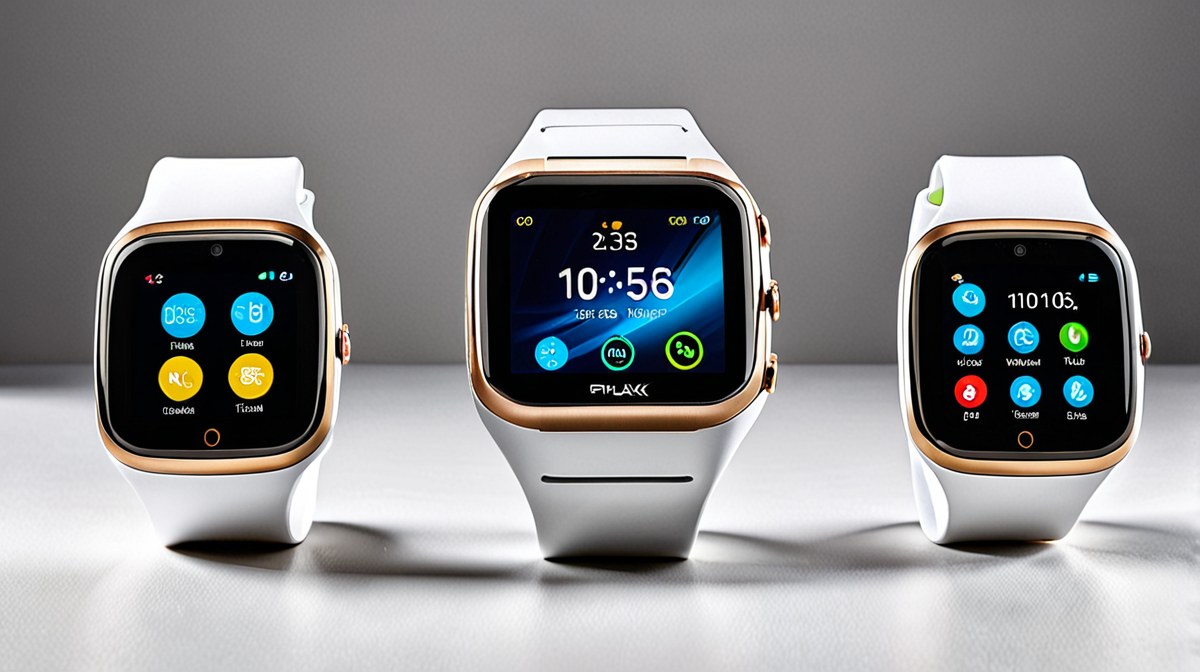
Design & Build Quality: Durability for Active Kids
The physical design and build quality of kids' smartwatches are paramount, as these devices endure the rigors of daily play. Manufacturers widely report using durable plastics and silicone straps, designed to withstand drops and impacts. For instance, the Xplora X6Play, according to published specifications, features a robust polycarbonate casing and a TFT display with reinforced glass, contributing to its reported IP68 water and dust resistance. Reviewers widely note this makes it suitable for splashes and brief immersion, though not extended swimming. The TickTalk 5, conversely, utilizes a slightly larger form factor, with a reported aluminum alloy frame for added protection and a Gorilla Glass screen, which users frequently praise for its scratch resistance.
Parental feedback consistently highlights the importance of comfortable, adjustable straps. The Gabb Watch 3, for example, offers a soft, hypoallergenic silicone band that is widely reported to fit a range of wrist sizes from young children to pre-teens. Weight is another critical factor; lighter watches, typically under 50 grams, are generally preferred to avoid discomfort during extended wear. The physical button layout is also designed for simplicity, with most models featuring one or two prominent buttons for SOS calls or navigating menus, minimizing complexity for young users. The overall consensus among expert reviews is that while no kids' watch is indestructible, the leading models offer a commendable balance of durability and child-friendly aesthetics.
Material choices also extend to the display. While some budget options may use acrylic, the predominant trend for 2026's higher-end models is tempered glass, offering better clarity and scratch resistance. The reported screen sizes typically range from 1.3 to 1.54 inches, providing enough real estate for basic interactions without being overly bulky on a child's wrist. The integration of a front-facing camera, common in models like the TickTalk 5 and Xplora X6Play, is often discreetly placed to maintain the watch's rugged profile. Overall, manufacturers are clearly prioritizing resilience and ease of use in their designs, acknowledging the active lifestyles of their target demographic.
Safety Features & GPS Tracking: Peace of Mind for Parents
Safety features are the cornerstone of kids' smartwatches, with GPS tracking and communication tools being the most critical. According to manufacturer specifications, leading models such as the Xplora X6Play and TickTalk 5 integrate multi-constellation GPS (GPS, GLONASS, Galileo) for improved accuracy, with reported precision often within 5-10 meters in open outdoor environments. User feedback, however, frequently notes that accuracy can degrade significantly indoors or in dense urban areas, a common limitation of satellite-based positioning. These devices typically offer 'safe zones' or 'geofencing,' allowing parents to set virtual boundaries and receive alerts when the child enters or exits these predefined areas. This feature is widely reported as highly effective for monitoring school commutes or play areas.
Communication capabilities are restricted to a parent-approved contact list, preventing unwanted calls or messages. The Gabb Watch 3, for instance, emphasizes this 'walled garden' approach, allowing only pre-approved contacts to call or text the child, and vice versa. This strict control is a significant selling point for parents prioritizing a highly secure communication environment. SOS buttons are standard across all reputable kids' smartwatches, designed to instantly alert pre-designated emergency contacts with the child's location. Reviewers widely commend the responsiveness of these SOS functions, though some note the importance of teaching children how and when to use them effectively.
Beyond basic tracking and communication, some models incorporate features like listen-in functions (with parental consent and notification on the child's watch, as reported by manufacturers) or remote camera activation, though these are less common due to privacy concerns. The primary focus remains on two-way calling, secure messaging, and robust location tracking. Battery life directly impacts the reliability of these safety features; a watch with a drained battery cannot track or communicate. Therefore, the reported 48-72 hour battery life of top models under typical usage conditions is crucial for maintaining continuous parental oversight. The integration with companion apps on the parent's smartphone provides a centralized dashboard for managing contacts, settings, and tracking location history, which is consistently praised by users for its ease of use and comprehensive control.
Communication & Entertainment: Balancing Fun with Focus
Kids' smartwatches offer a controlled environment for communication and entertainment, aiming to provide a 'smart' experience without the distractions of a full smartphone. Two-way calling is a fundamental feature, allowing children to call and receive calls from a pre-approved contact list managed by parents through a companion app. The call quality, according to expert reviews, is generally clear on leading models like the TickTalk 5 and Xplora X6Play, often comparable to a basic feature phone. Text messaging is also common, typically supporting pre-set messages, emojis, or voice-to-text functionality, as reported by manufacturers, rather than a full QWERTY keyboard which would be impractical on a small screen. Some advanced models, like the TickTalk 5, even support video calling to approved contacts, leveraging their front-facing cameras.
For entertainment, manufacturers often include a curated selection of kid-friendly games and activity trackers. These games are typically simple, puzzle-based, or educational, designed to be engaging without being overly addictive. The Xplora X6Play, for example, features a 'Goplay' platform that converts steps into virtual coins, encouraging physical activity. Activity tracking, including step counting and active minutes, is a standard inclusion, with data synced to the parental app to monitor a child's activity levels. However, it's important to note that these trackers are not medical devices and should not be relied upon for precise health metrics, as widely reported by experts.
Unlike adult smartwatches, direct internet browsing or social media access is intentionally absent or severely restricted on most kids' smartwatches. The Gabb Watch 3 is a prime example, explicitly designed to exclude internet access, games, and social media to minimize distractions and exposure to inappropriate content. While this limits 'fun' in a traditional sense, it aligns with many parents' desire for a safer, more focused device. The balance between offering engaging features and maintaining a safe, distraction-free environment is a key differentiator among models, with some leaning towards more entertainment (like Xplora) and others towards strict communication (like Gabb). The presence of a camera, typically 2-5MP, allows for basic photo and video capture, which can be a source of fun for children, with images often shared only with approved contacts.
Battery Life & Charging: Keeping Connected
Battery life is a critical consideration for kids' smartwatches, directly impacting the reliability of safety features like GPS tracking and communication. Manufacturers typically report battery capacities ranging from 500mAh to 1000mAh. For instance, the Xplora X6Play is published with an 880mAh battery, claiming up to 72 hours of standby time and 8 hours of talk time, while the TickTalk 5 reportedly features a 1000mAh battery, also aiming for multi-day standby. However, actual usage, particularly heavy reliance on GPS tracking, calling, and games, can significantly reduce these figures. Reviewers widely note that real-world battery performance often falls short of manufacturer claims, with many devices requiring daily or every-other-day charging, especially for active users.
Charging methods vary but commonly involve proprietary magnetic charging cables or USB-C. Magnetic chargers, while convenient, can sometimes be fiddly for young children to align correctly. USB-C is becoming more prevalent, offering universal compatibility and faster charging speeds. The reported charging times typically range from 1.5 to 2.5 hours for a full charge, which is standard for devices of this battery capacity. The inclusion of a low-battery alert feature, which notifies parents when the watch's power is running low, is a widely appreciated safety net, ensuring parents are aware if their child's device is about to lose connectivity.
Optimizing battery life often involves managing settings through the parental app, such as adjusting the frequency of location updates. More frequent updates provide greater real-time accuracy but consume more power. Some models also include power-saving modes that prioritize essential functions when the battery is critically low. The consensus among expert analysis is that while manufacturers are making strides in battery optimization, continuous connectivity and GPS tracking remain power-intensive. Therefore, parents should anticipate a regular charging routine to ensure the watch is always ready for use, especially if relying on it for critical safety functions. The move towards larger batteries and more efficient chipsets in 2026 models aims to mitigate these concerns, but user vigilance in charging habits remains key.
Value & Verdict: Who Should Buy Which Watch?
Assessing the value of kids' smartwatches involves weighing initial purchase price against recurring subscription costs, feature set, and overall build quality. The upfront cost for leading models typically ranges from $150 to $250, with an additional monthly cellular plan fee, often between $10 and $20, depending on the carrier and data allowance. This recurring cost is a significant factor in the long-term value proposition. The Xplora X6Play, for example, offers a strong balance of features including robust GPS, two-way calling, and activity tracking, making it an excellent all-rounder for active kids needing reliable communication and tracking. Reviewers widely recommend it for families seeking a feature-rich experience without overwhelming complexity.
The TickTalk 5, while often at the higher end of the price spectrum, justifies its cost with comprehensive communication options including video calling, a larger battery, and a more premium build quality. It suits parents who want the most advanced communication features and are comfortable with a slightly higher investment. Its robust parental control dashboard is frequently praised by users for its depth and ease of use. Conversely, the Gabb Watch 3 targets a specific niche: parents who prioritize a 'safe phone' experience with minimal distractions. Its deliberate exclusion of internet access, social media, and extensive gaming makes it ideal for younger children or those requiring strict digital boundaries, though it may feel restrictive to older kids or those accustomed to more interactive devices.
Ultimately, the choice depends on individual family needs and budget. For a well-rounded device that balances safety, fun, and durability, the Xplora X6Play stands out. If cutting-edge communication and a premium experience are paramount, the TickTalk 5 is a strong contender. For the strictest control over digital exposure, the Gabb Watch 3 offers an unparalleled 'safe' environment. Reviewers consistently advise considering the child's age, maturity, and specific usage scenarios when making a purchase, as each watch caters to slightly different parental priorities and child needs.