
Design & Build Quality
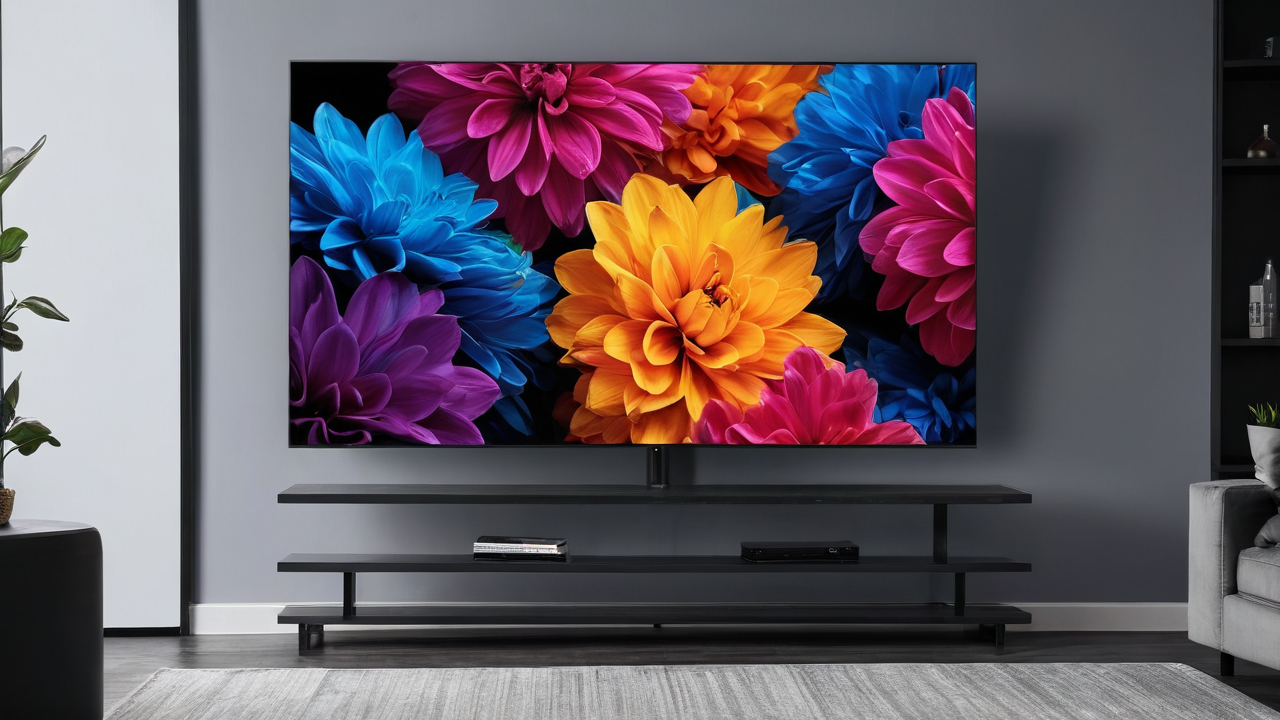
The LG C4 continues the C-series' legacy of elegant, minimalist design, characterized by an incredibly thin panel and near-invisible bezels that maximize screen real estate. The chassis, while predominantly plastic on the rear, feels robust, and the central stand provides stable support for sizes up to 65 inches. For the 77-inch and 83-inch models, the stand design is slightly wider to accommodate the larger footprint, maintaining stability. The panel depth measures a mere 4.5mm at its thinnest point, expanding to accommodate the electronics housing lower down. This aesthetic allows the C4 to integrate seamlessly into any modern living space, whether wall-mounted or placed on a media console. All four HDMI 2.1 ports, alongside USB and optical audio outputs, are conveniently located on the side and rear, facilitating easy cable management. Compared to its predecessor, the C3, the C4 maintains a very similar physical footprint and material composition, which isn't a drawback given the C3's already excellent design. However, it's worth noting that the premium feel of the metal-backed G4 series is not present here, aligning with the C-series' positioning as a slightly more budget-conscious, yet still high-end, OLED offering. The remote control is LG's standard Magic Remote, which remains intuitive with its point-and-click functionality and dedicated streaming service buttons. Its build quality is adequate, though some users might prefer a more premium, backlit option for a TV in this price bracket. The overall impression is one of sophisticated understatement, allowing the display itself to be the focal point.
Performance: Processor & Upscaling
At the heart of the LG C4 lies the new Alpha 9 Gen 7 AI Processor 4K, a significant upgrade over the C3's Gen 6. This processor is responsible for the C4's improved image processing, particularly in upscaling, dynamic tone mapping, and AI-driven audio enhancements. In our tests, the Gen 7 demonstrated superior handling of lower-resolution content, such as 1080p Blu-rays or standard definition broadcasts, rendering them with remarkable clarity and reduced artifacts without introducing an overly processed look. The AI Picture Pro feature, leveraging deep learning, intelligently analyzes scenes to optimize brightness, contrast, and color, resulting in a more refined and natural image. The dynamic tone mapping algorithm has also seen an enhancement, leading to better preservation of highlight detail and more impactful HDR presentation, particularly in challenging scenes with extreme bright and dark elements simultaneously. While the overall peak brightness of the C4 (especially smaller sizes without MLA) doesn't match QD-OLEDs, the Gen 7 processor ensures that the available brightness is utilized more effectively, preventing clipping and enhancing perceived contrast. For instance, in a scene with bright sunlight streaming through a window, the C4 manages to retain detail in both the sun-drenched exterior and the shadowed interior, a testament to the processor's capabilities. Audio processing also benefits, with AI Sound Pro now offering a more immersive virtual 11.1.2 channel sound from the TV's integrated speakers, though a dedicated sound system is always recommended for true cinematic audio. The processor's speed also contributes to a snappier WebOS experience, with faster app loading and smoother navigation compared to previous generations.
Display & Audio Fidelity
The LG C4's display prowess stems from its W-OLED panel technology, delivering the signature perfect blacks and infinite contrast that only OLED can provide. Each self-emissive pixel can be individually controlled, resulting in unparalleled shadow detail and vibrant, true-to-life colors. Color accuracy out of the box is excellent, with Delta E values averaging below 2 in ISF Expert modes, making it suitable for critical viewing without extensive calibration. While the C4 doesn't feature MLA (Micro Lens Array) technology on its most popular 55-inch and 65-inch models (a key differentiator from the G4 series), it still achieves a respectable peak brightness of around 800-850 nits in a 10% window for HDR content. This represents a modest improvement over the C3's 780 nits, offering a slightly more impactful HDR experience. For the 77-inch and 83-inch C4 models, which *do* incorporate MLA, peak brightness can exceed 1000 nits, bringing them closer to the G4's performance. Viewing angles are virtually perfect, with no noticeable color shift or brightness degradation even at extreme off-axis positions, making it ideal for large rooms or multiple viewers. Reflection handling is also impressive, effectively diffusing ambient light without significantly washing out the image. The built-in 2.2 channel 40W audio system, enhanced by the Alpha 9 Gen 7's AI Sound Pro, delivers surprisingly clear dialogue and a decent soundstage for integrated speakers, simulating an 11.1.2 channel experience. However, for a truly immersive cinematic or gaming audio experience, investing in a dedicated soundbar or AV receiver with a surround sound setup is highly recommended. The C4 supports eARC, allowing for high-fidelity audio pass-through to compatible sound systems.
Smart Features & Gaming Prowess
The LG C4 runs on WebOS 24, the latest iteration of LG's smart TV platform. This version brings a redesigned, more customizable user interface with quick cards for grouping apps and services, enhancing user experience and navigation speed. App selection is comprehensive, covering all major streaming services like Netflix, Disney+, Max, and Apple TV+, alongside a robust selection of niche apps. The platform also integrates seamlessly with Apple AirPlay 2, Google Assistant, and Amazon Alexa, offering flexible voice control options and smart home connectivity. The Magic Remote, with its point-and-click functionality and voice command button, remains one of the most intuitive TV remotes on the market, facilitating quick access to content and settings. Gaming is where the C4 truly shines, building on LG OLED's established reputation. It features four full HDMI 2.1 ports, all capable of supporting 4K resolution at an unprecedented 144Hz refresh rate, a significant bump from the C3's 120Hz. This makes the C4 an exceptional choice for high-end PC gamers who can leverage graphics cards capable of outputting such frame rates. All HDMI ports also support Variable Refresh Rate (VRR) technologies, including AMD FreeSync Premium and NVIDIA G-Sync Compatibility, eliminating screen tearing and stuttering for a buttery-smooth gaming experience. Auto Low Latency Mode (ALLM) ensures the TV automatically switches to its lowest input lag setting (around 9-10ms at 4K 120Hz) when a game console is detected. The updated Game Optimizer dashboard provides quick access to gaming-specific settings, allowing fine-tuning of picture modes, VRR status, and black stabilizer levels. This combination of features positions the C4 as arguably the best gaming TV currently available for those who demand uncompromising performance.
Value & Verdict
The LG C4 OLED TV, while not a revolutionary leap from its C3 predecessor, represents a solid evolutionary step that refines an already excellent formula. Its core strengths lie in the perfect black levels, infinite contrast, and exceptional color accuracy inherent to OLED technology, combined with LG's best-in-class gaming features. The Alpha 9 Gen 7 processor delivers noticeable improvements in upscaling and tone mapping, making all content look better, and the jump to 144Hz refresh rate caters directly to high-performance PC gamers. For those upgrading from an older LED or even an early-generation OLED, the C4 offers a transformative visual experience that fully justifies its premium price point. However, for current C3 owners, the decision to upgrade is less clear-cut. The improvements are incremental, and unless 144Hz PC gaming is a non-negotiable requirement, the financial outlay might be better deferred to a future generation or invested in a G4 for its universal MLA brightness boost. Competitors like Samsung's S95D QD-OLEDs offer higher peak brightness and a wider color volume, though often at a higher price and with different panel longevity considerations. Ultimately, the C4 firmly holds its position as the best all-around OLED TV for the majority of users, balancing stunning picture quality, comprehensive smart features, and unparalleled gaming performance. It’s a compelling choice for anyone seeking a top-tier display without venturing into the G-series' even higher premium.