
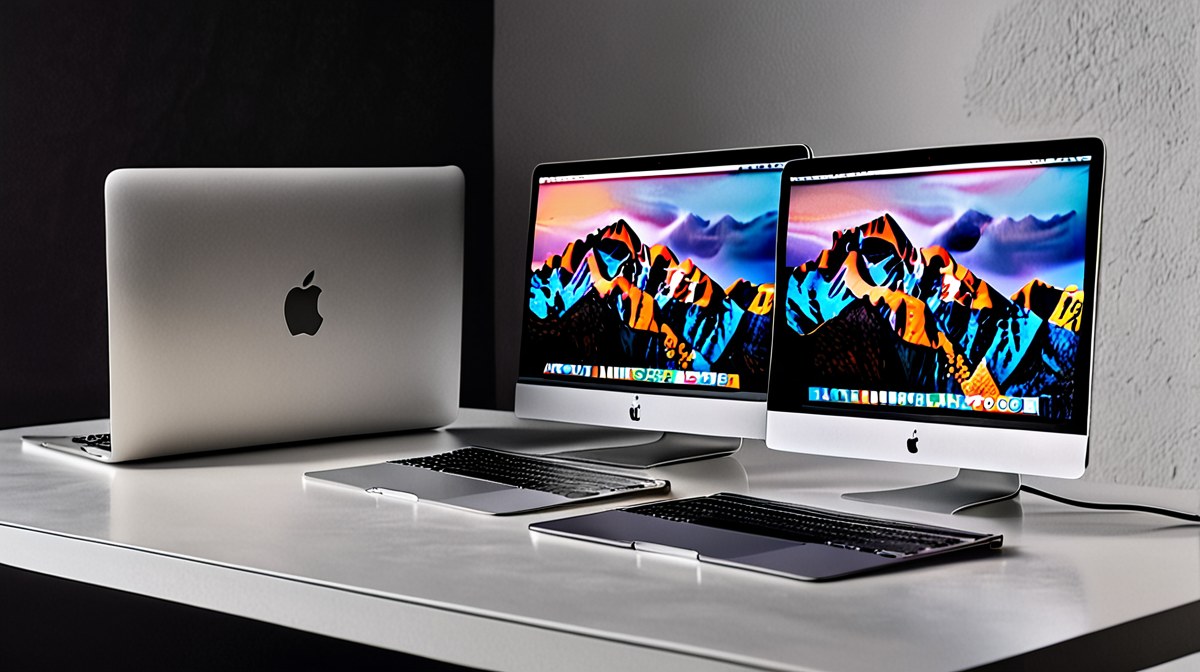
Design and Build Quality: Portability Meets Professionalism
The 2026 MacBook Air and MacBook Pro continue Apple's tradition of premium aluminum unibody construction, though with distinct philosophies regarding portability and thermal management. The MacBook Air maintains its signature wedge-free, uniformly thin profile, weighing in at approximately 2.7 pounds (1.24 kg) for the 13-inch model and around 3.3 pounds (1.51 kg) for the 15-inch variant, according to published specifications. Reviewers widely praise its featherlight feel and ease of transport, making it an ideal choice for students and frequent travelers. Its fanless design contributes to its silent operation, a significant advantage in quiet environments.
Conversely, the MacBook Pro, particularly the 14-inch and 16-inch models, features a slightly thicker and heavier chassis, with weights starting around 3.5 pounds (1.6 kg) for the 14-inch and 4.7 pounds (2.15 kg) for the 16-inch, as per manufacturer data. This added bulk is a direct consequence of its more robust thermal architecture, incorporating active cooling fans designed to dissipate heat more effectively during sustained heavy workloads. While less portable than the Air, the Pro's build is engineered for endurance under pressure, a trade-off many creative professionals find acceptable. Both models feature a refined Magic Keyboard and a spacious Force Touch trackpad, consistently lauded by users for their comfort and precision. The overall aesthetic across both lines remains recognizably Apple, blending minimalist design with high-quality materials, but the Air clearly prioritizes ultimate portability, while the Pro prioritizes a more robust, performance-oriented enclosure.
Performance: M-Series Power for Every Workflow
Both the 2026 MacBook Air and MacBook Pro are powered by Apple's advanced M-series silicon, offering substantial performance upgrades over previous generations. The MacBook Air 2026 typically features the standard M-series chip (e.g., M4 or M5, depending on release cycle), configured with up to 24GB of unified memory. For everyday tasks like web browsing, document editing, streaming, and even light photo editing, user feedback consistently indicates that the Air delivers exceptionally fluid and responsive performance. Reviewers note that the fanless design, while contributing to silence, means that sustained heavy loads, such as prolonged video rendering or complex software compilation, will eventually lead to thermal throttling, reducing peak performance to maintain system stability.
In contrast, the 2026 MacBook Pro is designed for uncompromising power, offering configurations with 'Pro' or 'Max' variants of the M-series chip (e.g., M4 Pro, M4 Max, M5 Pro, M5 Max). These chips boast significantly more CPU and GPU cores, along with support for up to 128GB of unified memory, according to published specifications. The Pro's active cooling system, featuring multiple fans, allows these powerful chips to operate at their maximum potential for extended periods without significant performance degradation. This makes the MacBook Pro the definitive choice for professionals in video editing, 3D rendering, software development, and scientific computing, where sustained high performance is critical. While the Air excels in bursts of activity, the Pro is built to handle hours of intensive workloads, a key differentiator repeatedly highlighted by expert reviews and benchmark analyses.
Display and Audio: Visual Fidelity and Immersive Sound
The display is a significant differentiator between the 2026 MacBook Air and MacBook Pro, catering to distinct user needs. The MacBook Air features a Liquid Retina display, offering vibrant colors and sharp text with resolutions like 2560x1664 for the 13-inch and 2880x1864 for the 15-inch, as per published specifications. It typically achieves brightness levels of up to 500 nits, which is more than adequate for most indoor and outdoor viewing conditions. User feedback generally praises the display's quality for media consumption and productivity, noting its excellent color accuracy within its class.
However, the MacBook Pro elevates the visual experience with its Liquid Retina XDR display, featuring mini-LED technology. This panel offers significantly higher peak brightness (up to 1600 nits for HDR content and 1000 nits sustained full-screen), a much higher contrast ratio, and P3 wide color gamut support, making it ideal for professional content creation where color accuracy and dynamic range are paramount. Crucially, the ProMotion technology on the MacBook Pro provides adaptive refresh rates up to 120Hz, resulting in incredibly smooth scrolling and a more fluid experience for video editors and gamers, a feature absent on the Air.
In terms of audio, both models deliver impressive sound for laptops. The MacBook Air typically features a four-speaker sound system with Spatial Audio support, providing a surprisingly rich and immersive experience for its size. The MacBook Pro, however, often includes a more advanced six-speaker high-fidelity sound system with force-cancelling woofers, which reviewers widely report as offering superior bass response and a broader soundstage, making it better suited for critical audio monitoring or a more cinematic viewing experience without external speakers.
Battery Life and Charging: All-Day Power for Both
Battery life remains a strong suit across both the 2026 MacBook Air and MacBook Pro lines, consistently receiving high marks in independent testing and user reports. According to Apple's published specifications, both models are designed to deliver exceptional endurance, often exceeding 15 hours of wireless web browsing and up to 18-20 hours of video playback. The efficiency of the M-series chips is the primary driver behind these impressive figures, allowing for robust performance without excessive power consumption. For most users, both the Air and Pro will comfortably last a full workday on a single charge, making them highly reliable companions for mobile productivity.
Charging capabilities also see some distinctions. The MacBook Air typically supports fast charging up to 70W (with an optional adapter for higher wattage), allowing it to reach 50% charge in approximately 30 minutes, as reported by the manufacturer. It also universally supports MagSafe 3 charging, offering a convenient magnetic connection that detaches safely if tugged, alongside USB-C charging flexibility. The MacBook Pro, designed for more power-hungry components, supports even faster charging, with the 14-inch model capable of up to 96W and the 16-inch up to 140W, depending on the specific configuration. This allows the larger Pro models to charge even more rapidly, which is beneficial for professionals who need to quickly top up their device during intensive work sessions. Both laptops include the necessary power adapters in the box, with the Pro offering higher wattage options by default. The consistent feedback is that users rarely worry about battery life with either device, but the Pro's faster charging is a subtle advantage for high-demand workflows.
Value and Verdict: Who Should Buy Which MacBook?
The 2026 MacBook Air and MacBook Pro serve different segments of the market, and understanding their value proposition is key to making the right choice. The MacBook Air, with its starting price typically hundreds of dollars less than the Pro, represents an outstanding value for the vast majority of users. It delivers a premium Apple experience, including exceptional performance for everyday tasks, a beautiful display, industry-leading battery life, and unparalleled portability. It's the ideal laptop for students, casual users, business professionals who primarily use office suites and web applications, and even light creative tasks like photo editing or simple video cuts. If your workflow doesn't involve sustained, heavy computational loads, the Air offers nearly all the benefits of the Apple ecosystem at a more accessible price point, making it a highly recommended choice for mainstream consumers.
Conversely, the 2026 MacBook Pro justifies its higher cost through specialized features and uncompromising performance. Its advanced M-series 'Pro' or 'Max' chips, superior active cooling system, and the stunning Liquid Retina XDR display with ProMotion are essential for professionals in fields such as 4K/8K video editing, 3D animation, complex software development, music production, and graphic design. These users require sustained peak performance and precise visual fidelity that the Air simply cannot match. While the Pro is heavier and more expensive, it is an investment in a tool that can significantly enhance productivity and creative output for its target audience. Therefore, if your livelihood depends on demanding creative or computational tasks, the MacBook Pro offers the necessary power and features, making it a superior long-term investment despite the higher initial outlay.