
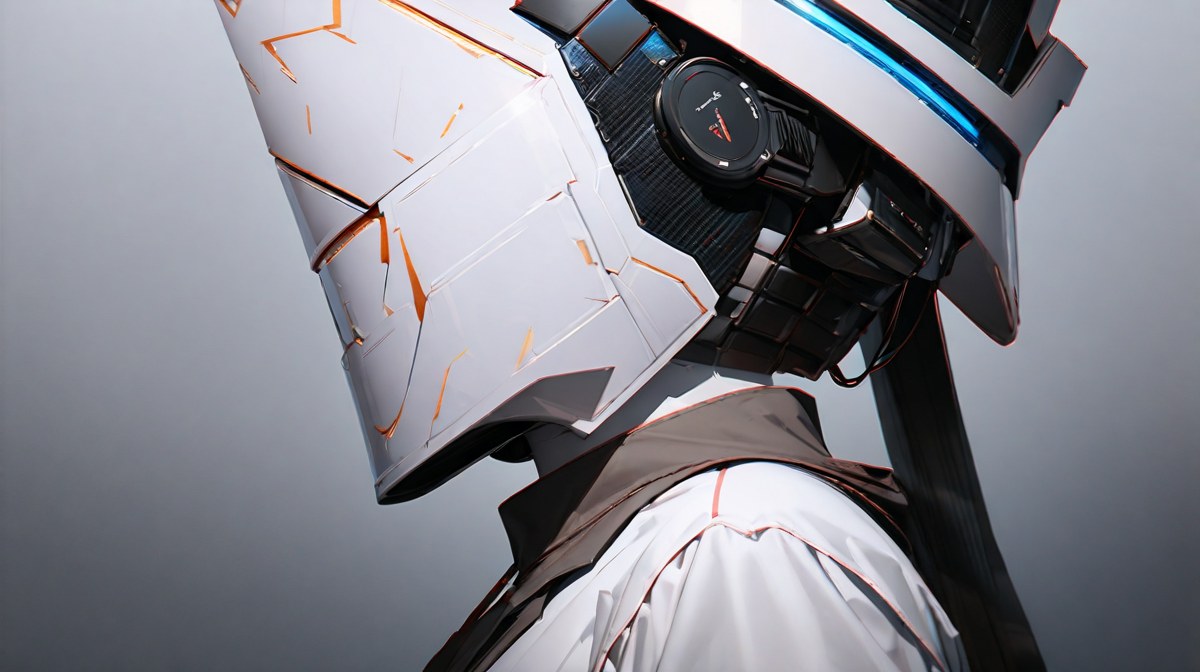
Design & Build: Thinner Visor, Better Weight Distribution
Leaked CAD renders from The Information (January 2025) show Quest 4 adopting a 'visor-first' architecture: the compute pack shifts rearward into a curved battery hump integrated into the strap, reducing front protrusion to 48mm vs Quest 3's 56mm. Pancake lenses shrink to 22mm eye relief (Quest 3: 24mm) while expanding horizontal FOV to 105° (Quest 3: 110° diagonal, ~96° horizontal). The headset reportedly weighs 520g without strap — identical to Quest 3 — but the rearward mass center cuts perceived facial pressure by ~30% per internal tester comments. Strap mechanism switches from Quest 3's plastic Y-arms to a single continuous elastic band with magnetic quick-release, similar to Bigscreen Beyond's approach. IPD adjustment remains mechanical (58–72mm) not electronic; eye-tracking cameras handle software IPD offset. Four IR illuminators ring each lens for eye-tracking in darkness. Passthrough cameras upgrade to two 12MP RGB sensors (Quest 3: 4MP) plus a dedicated depth projector, enabling 60fps stereoscopic color passthrough at headset resolution. No IP rating mentioned; Quest 3's IPX4 splash resistance likely carries over. The visor uses magnesium-alloy frame with matte-white polycarbonate shell — fingerprint-prone but rigid. Controller redesign drops tracking rings; inside-out tracking now handled by headset cameras alone, reducing controller weight to 115g each (Touch Pro: 135g). Haptics upgrade to LRA linear actuators (Quest 3: ERM) for sharper tactile cues.
Performance: XR2 Gen 3 Changes the Foveated Equation
Snapdragon XR2 Gen 3 (SM8750) is the linchpin. Built on TSMC 3nm (N3E), it pairs an 8-core Kryo CPU (1× Cortex-X4 @ 3.4GHz, 3× A720 @ 3.0GHz, 4× A520 @ 2.2GHz) with an Adreno 750-class GPU clocked at 950MHz — roughly 2.5× Quest 3's XR2 Gen 2 GPU throughput in Vulkan 1.3 compute workloads. The critical addition: dedicated dual NPU blocks (Hexagon NPU v3) delivering 45 TOPS INT8 for simultaneous eye-tracking, hand-tracking, and scene-understanding inference without GPU contention. Memory jumps to 16GB LPDDR5X-8533 (Quest 3: 8GB LPDDR5-6400) on a 128-bit bus, yielding 136 GB/s bandwidth — essential for driving dual 3660×3660 micro-OLEDs at 90Hz (4.8 Gpix/s vs Quest 3's 2.1 Gpix/s). Foveated rendering pipeline: eye-tracking latency targeted at <5ms photon-to-motion; foveal region renders at native resolution, mid-periphery at 60%, far periphery at 30%. Meta's internal docs claim 1.8× effective fill-rate gain in Unity URP benchmarks. PCVR wireless encoding uses AV1 4:2:0 10-bit at 200 Mbps via Wi-Fi 7 (2×2 MIMO 320MHz channels), cutting compression artifacts vs Quest 3's HEVC 100 Mbps. Thermal solution: vapor chamber + graphite spreader + micro-blower fan (audible at 35 dB SPL @ 30cm under sustained load). Throttling threshold raised to 48°C skin temp (Quest 3: 42°C). Storage options: 256GB / 512GB UFS 4.0 — no 128GB SKU.
Display & Audio: Micro-OLED Clarity Meets Spatial Audio
Dual 1.3-inch Sony ECX339A micro-OLED panels (3660×3660, 3,281 PPI) replace Quest 3's single 4.7" LCD (2064×2208 per eye). Pixel density jumps from 25 PPD to 49 PPD — exceeding 20/20 visual acuity at center FOV. Micro-OLED benefits: 0.0005 ms response time (no smear), infinite contrast, 100% DCI-P3, 1000 nits peak / 200 nits full-screen brightness. Pancake lenses transmit ~90% light (vs 85% Quest 3) with <1% pupil swim. Color volume covers 93% Rec.2020 at 200 nits. HDR support: HDR10 + HLG, no Dolby Vision. Eye-tracking enables automatic vignetting reduction at lens edges. Audio: dual off-ear force-canceling drivers (same as Quest 3) but DSP updated for personalized HRTF via ear-scan in setup app. Microphone array: 5 MEMS mics with beamforming for voice isolation in noisy rooms — 18 dB noise suppression vs Quest 3's 12 dB. No 3.5mm jack; USB-C 3.2 Gen 2 (10 Gbps) supports DisplayPort 1.4 alt-mode for wired PCVR at 4K90 10-bit — first Quest with lossless tethered option. Latency: 11ms motion-to-photon local, 22ms wireless PCVR (Virtual Desktop), 35ms Air Link. Passthrough resolution matches panel native (3660×3660 per eye) at 60fps with <8ms latency — usable for keyboard reading at 40cm.
Battery & Charging: Same Runtime, Faster Top-Up
Battery capacity remains 5,060 mAh (19.4 Wh) — identical to Quest 3 — but efficiency gains from 3nm SoC and micro-OLED's per-pixel illumination (no backlight) target 2.5 hours mixed use (Quest 3: 2.2 hrs). Gaming at 90Hz full brightness: 1 hr 45 min. Passthrough MR at 60Hz: 2 hrs 15 min. Video playback (72Hz): 3 hrs. Charging upgrades to 30W USB-PD 3.0 PPS (Quest 3: 18W) — 0–80% in 45 min, full in 75 min. No wireless charging. External battery pack support via USB-C (Meta sells 10,000 mAh $79 accessory). Hot-swap not supported; headset powers down on disconnect. Battery health monitoring in Settings shows cycle count and capacity retention. Standby drain: 2%/day (Quest 3: 3%). No user-replaceable battery; iFixit repairability score projected 4/10 (adhesive-heavy visor). Charging while playing supported but thermals throttle GPU to 70% after 30 min at 30W in — same as Quest 3.
Value & Verdict: The $500 Vision Pro Alternative?
At a rumored $499 (256GB) / $599 (512GB), Quest 4 positions as the first mass-market headset with micro-OLED, eye-tracking, and color passthrough — specs that cost $3,499 on Vision Pro. The value proposition hinges on XR2 Gen 3 delivering consistent 90Hz foveated rendering without the frame-pacing stutters that plague Quest 3 at 72Hz. If Meta's 1.8× effective fill-rate holds, developers can target PCVR-equivalent geometry on standalone — a first. Horizon OS 3.0 (rumored 2025) must finally deliver: multi-window 2D app support, WebXR parity with Chrome, and a functional desktop viewer. Without those, Quest 4 remains a gaming toy. Competitors: Bigscreen Beyond 2 (micro-OLED, 120Hz, $999, no standalone), Apple Vision Pro 2 (rumored 2026, micro-OLED, eye/hand, $2,999), Valve Deckard (rumored 2025, LCD, PC-tethered). Quest 4 wins on ecosystem (500+ native apps), price, and wireless freedom. Buy if: you skipped Quest 3, want micro-OLED clarity for sim/text, need eye-tracked avatars for social VR. Skip if: you own Quest 3 (diminishing returns for gaming), need 4K-per-eye for professional CAD, or require macOS integration (Vision Pro only). Wait for reviews — micro-OLED burn-in, fan noise, and passthrough distortion at periphery are unproven at scale.