
Design Philosophy & Acoustic Principles
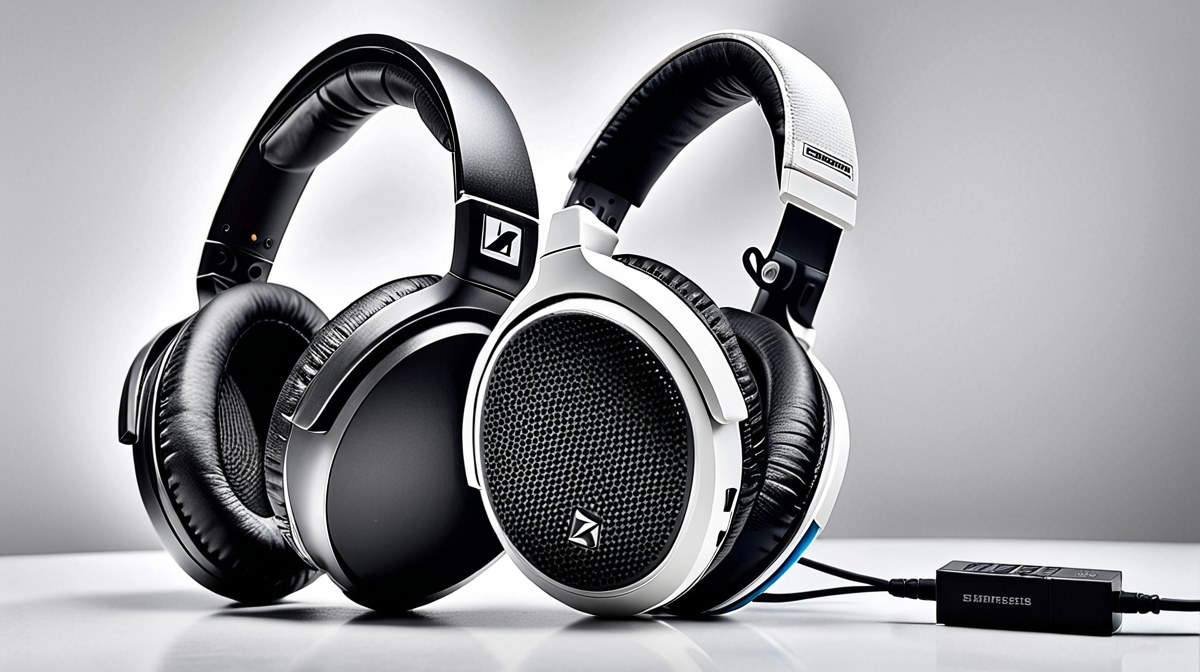
The fundamental difference between open-back and closed-back headphones lies in their ear cup design. Open-back headphones, such as the widely respected Sennheiser HD 660S2 or Beyerdynamic DT 990 Pro, feature perforated or mesh-backed ear cups that allow sound to escape and air to pass through. This design prevents pressure build-up within the ear cup, which manufacturers report contributes to a more natural and expansive soundstage. Sound waves are not trapped and reflected internally as much, leading to a less 'in-head' listening experience. Reviewers widely note that this open design mimics the acoustics of listening to speakers in a room, offering superior spatial imaging and a sense of 'air' around instruments. However, this inherent openness means they provide virtually no passive noise isolation, and sound leaks out significantly, making them unsuitable for shared environments. Published specifications often highlight the acoustic transparency as a key feature.
Conversely, closed-back headphones, exemplified by models like the Sony WH-1000XM5 or Audio-Technica ATH-M50x, feature solid ear cups that completely enclose the ear. This sealed design serves two primary purposes: maximizing passive noise isolation and minimizing sound leakage. According to manufacturers, the enclosed chamber creates a more direct sound path to the ear, often resulting in a stronger, more impactful bass response due to the contained air pressure. While this design is excellent for blocking out external noise and keeping your music private, reviewers frequently report a more 'intimate' or 'cramped' soundstage compared to open-back models. The internal reflections within the sealed cup can also subtly alter the frequency response, which some audiophiles perceive as less 'natural' or 'analytical'. The choice in design philosophy directly dictates the primary use cases and acoustic performance characteristics.
Soundstage, Imaging, and Frequency Response
When evaluating soundstage and imaging, open-back headphones consistently receive higher marks in expert consensus. Models like the Hifiman Sundara are frequently cited for their ability to create a wide, deep, and highly detailed soundstage, allowing listeners to precisely pinpoint individual instruments and vocals within a three-dimensional space. This 'out-of-head' experience is a direct result of their acoustic design, which allows sound waves to dissipate more naturally, preventing the build-up of reflections that can compress the sound. Reviewers widely note that this characteristic makes open-back headphones exceptional for classical music, jazz, and live recordings, where spatial accuracy and ambience are paramount. The perceived 'airiness' is a common descriptor, indicating a less fatiguing and more immersive listening session.
Closed-back headphones, while offering significant advantages in other areas, typically present a more confined soundstage. While premium closed-back options like the Focal Stellia attempt to mitigate this, the inherent sealed design means sound waves are reflected within the ear cup, resulting in a more 'in-head' or 'direct' presentation. This doesn't necessarily mean a 'bad' soundstage, but rather a different one, often described as more focused and intense. In terms of frequency response, closed-back headphones frequently exhibit a more pronounced bass response due to the pressure chamber effect, which can be advantageous for genres requiring strong low-end impact, such as electronic music or hip-hop. Open-back headphones, while still capable of deep bass, tend to present it with more nuance and less raw impact, often favoring a flatter, more analytical frequency response across the spectrum, as published in their specifications. This distinction is crucial for users prioritizing specific audio characteristics.
Noise Isolation vs. Environmental Awareness
The starkest practical difference between open-back and closed-back headphones lies in their interaction with the surrounding environment. Closed-back headphones are designed with passive noise isolation as a primary function. Their sealed ear cups physically block external sound waves from reaching the listener's ears. This makes them an excellent choice for environments with significant ambient noise, such as commuting, open-plan offices, or while studying in a café. Reviewers and user feedback consistently highlight the effectiveness of models like the Bose QuietComfort 45 or the aforementioned Sony WH-1000XM5 in creating a personal, quiet listening space. This isolation is also critical for audio professionals, such as recording engineers or musicians tracking vocals, who need to monitor their output without interference from external sounds or microphone bleed.
Conversely, open-back headphones offer virtually no passive noise isolation. Their design actively allows ambient sound to enter the ear cups, and equally, sound from the headphones to leak out. This characteristic, while detrimental in public settings, is a deliberate design choice that contributes to their expansive soundstage and natural acoustics. For listeners in a quiet home or studio environment, this transparency can be an advantage, as it maintains a sense of connection to the surroundings. For instance, a user might still be able to hear a doorbell or a child's call while enjoying music. However, this also means that any external noise, from a humming PC fan to distant conversations, will readily intrude on the listening experience. The choice here is a direct trade-off: absolute silence for focused listening versus environmental awareness and a more 'open' sound profile.
Comfort, Portability, and Build Quality
Comfort is a highly subjective but critical factor, and both designs have distinct characteristics. Open-back headphones, due to their breathable design, generally offer superior comfort during extended listening sessions. The lack of a sealed chamber prevents heat and moisture build-up around the ears, reducing ear fatigue. Manufacturers like Audeze, with their planar magnetic open-back designs, often prioritize lightweight materials and plush velour earpads to enhance this comfort. Reviewers widely report that open-back models can be worn for hours without discomfort, making them ideal for long gaming sessions or critical audio work. However, their often larger, more intricate designs and exposed components can make them less robust for portable use.
Closed-back headphones, while providing isolation, can sometimes lead to increased ear temperature and pressure due to their sealed nature. This can cause discomfort over prolonged periods for some users. However, advancements in materials and ergonomic design, seen in models like the Sennheiser HD 400S, have significantly improved comfort in many closed-back options. Many closed-back headphones are also designed with portability in mind, featuring collapsible hinges and durable, impact-resistant materials suitable for travel. Their robust, enclosed construction often makes them more resistant to dust and minor spills compared to their open-back counterparts. Build quality varies across both categories, with premium models from brands like Focal or ZMF offering exceptional craftsmanship in both open and closed designs, utilizing materials like aerospace-grade aluminum and exotic woods, as detailed in their published specifications.
Value Proposition & Ideal Use Cases
The 'value' of open-back versus closed-back headphones is entirely dependent on the user's specific needs and listening environment. For audiophiles, music producers, or gamers who primarily listen in a quiet, dedicated space, open-back headphones often represent superior value for critical listening. Their expansive soundstage, precise imaging, and natural sound reproduction, as widely reported by audio experts, provide an immersive experience unmatched by most closed-back designs. Models like the Philips Fidelio X2HR offer excellent entry-level open-back performance, while high-end options like the Focal Utopia deliver reference-grade audio. The investment here is in sonic purity and spatial accuracy, sacrificing isolation and portability.
Conversely, for commuters, office workers, students, or anyone needing to block out external noise and keep their music private, closed-back headphones offer a more practical and often indispensable value proposition. Their excellent passive noise isolation and minimal sound leakage make them ideal for public transport, shared workspaces, or even focused work at home where others might be present. The robust bass response often found in closed-back designs also appeals to users who prioritize impact and energy in their music or gaming audio. Models like the Sony WH-1000XM5 (with active noise cancellation) or the Beyerdynamic DT 770 Pro (for studio use) exemplify the utility of closed-back designs. Ultimately, the 'right' choice isn't about which is objectively better, but which design aligns more closely with your primary listening habits and environmental constraints, a decision that should be carefully considered based on the trade-offs outlined.