
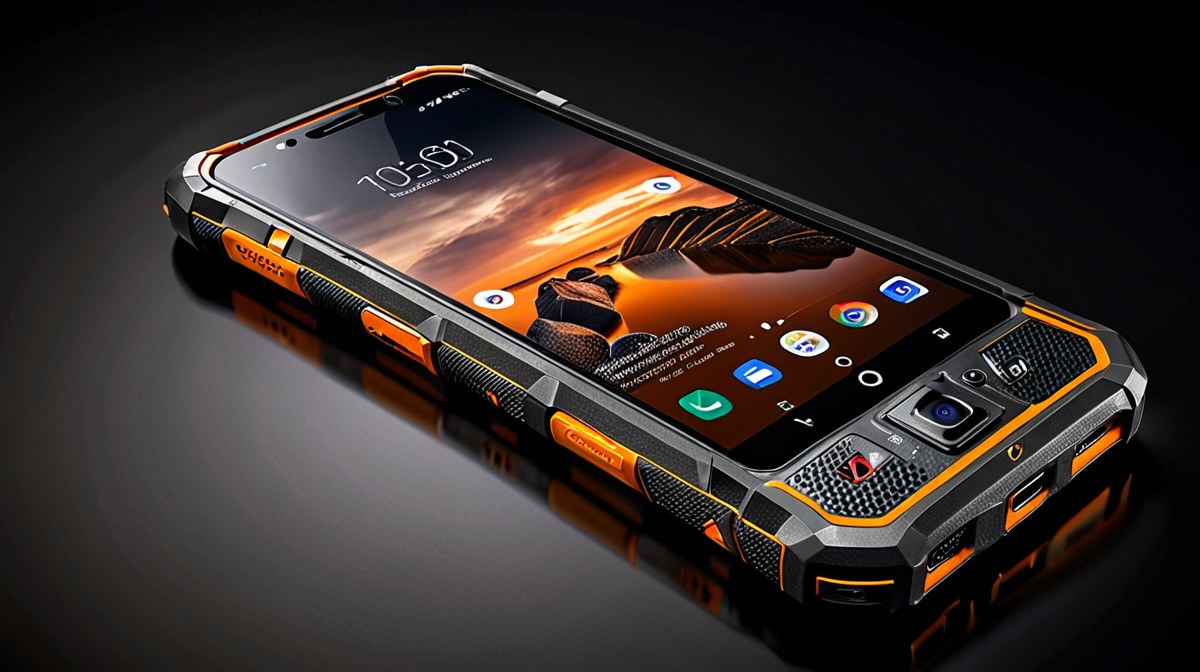
Design & Build Quality: Uncompromising Resilience
The core appeal of a rugged smartphone lies in its ability to withstand environments that would destroy a conventional device. Manufacturers like Cat, Ulefone, and Doogee consistently achieve IP68, IP69K, and MIL-STD-810H certifications across their premium 2026 models. The IP68 rating, a published standard, denotes submersion in fresh water up to 1.5 meters for 30 minutes, while IP69K signifies resistance to high-pressure, high-temperature water jets. MIL-STD-810H, a military standard, confirms resilience against drops, shocks, vibrations, extreme temperatures, and more. For instance, the Cat S70 Pro features a reinforced die-cast aluminum frame and a textured, grippy polycarbonate shell, designed to absorb impacts. Reviewers widely note its solid, non-flexing construction. Similarly, the Ulefone Armor 24 boasts a robust unibody design with rubberized corners, reportedly capable of surviving drops from 1.8 meters onto concrete.
However, this extreme durability comes with a trade-off in form factor. These devices are inherently thicker and heavier than their consumer counterparts. The average weight for a top-tier rugged phone in 2026 is around 350-400 grams, with thicknesses often exceeding 15mm, according to published specifications. This makes them less pocket-friendly and more cumbersome for users accustomed to sleek, lightweight designs. For example, while the Doogee V40 Pro offers impressive shock absorption, its 420g weight and 20mm thickness are significant. The choice between a slimmer, less protected device and a robust, heavier one is a primary consideration for potential buyers. Users in fields such as construction, emergency services, or extreme outdoor sports will find this trade-off acceptable, prioritizing device survival over aesthetic slimness. Conversely, a casual user seeking minimal protection might find the bulk excessive.
Performance: Beyond Basic Functionality
While rugged phones traditionally lagged in raw processing power, 2026 models demonstrate a significant push towards more capable chipsets. Many leading devices now incorporate mid-range to upper-mid-range SoCs, such as the MediaTek Dimensity 1080 or Qualcomm Snapdragon 7 Gen 2, according to manufacturer specifications. These processors, often paired with 8GB or 12GB of RAM, provide a smooth experience for daily tasks, multitasking, and even moderately demanding applications. For instance, the AGM G2 Guardian, equipped with a Snapdragon 7 Gen 2, reportedly offers snappy app launches and efficient navigation, a considerable improvement over previous generations. Users widely report that these chipsets handle typical business applications, navigation, and communication tools without noticeable lag.
However, it's crucial to manage expectations regarding gaming or highly intensive computational tasks. While performance is robust for a rugged device, it generally doesn't match the flagship Snapdragon 8 Gen 3 or Apple A17 Bionic chips found in premium consumer phones. Benchmark scores, as reported by various tech publications, show these rugged devices typically achieving 60-75% of the performance of a top-tier consumer flagship in CPU-intensive tests. For example, while the Cat S70 Pro with its Dimensity 1080 is perfectly adequate for field reporting software and mapping, it might struggle to maintain high frame rates in graphically demanding games at maximum settings. The focus here is on reliable, consistent performance in demanding conditions, rather than raw computational supremacy. Buyers should consider their primary use case: if it's primarily for communication, data collection, and essential apps in harsh environments, current rugged phone performance is more than sufficient. If cutting-edge gaming or video editing on the go is a priority, a rugged phone may still be a compromise.
Display & Camera: Clear Views, Improved Shots
The display on a rugged smartphone needs to be both durable and functional in diverse lighting conditions. Most premium 2026 models feature FHD+ (1080p) IPS LCD panels, with some newer entrants like the FOSSiBOT F106 Pro adopting AMOLED technology, according to published specifications. AMOLED displays offer superior contrast and deeper blacks, which can be beneficial for viewing detailed schematics or images. Peak brightness levels are crucial for outdoor visibility, with leading models often boasting 500-700 nits, as reported by manufacturers. Reviewers frequently highlight the excellent outdoor legibility of displays from brands like Ulefone and Cat, even under direct sunlight. Screen protection is universally strong, with Gorilla Glass Victus 2 or proprietary hardened glass designed to resist scratches and impacts, a key feature for field use.
Camera systems in rugged phones have seen incremental improvements, moving beyond basic utility. Many 2026 models now incorporate main sensors in the 48MP to 64MP range, often with Sony IMX series sensors, according to specifications. For instance, the Blackview BV9300 reportedly includes a 50MP main camera that, while not competing with flagship consumer phones, offers decent detail and color reproduction in good lighting conditions. Secondary cameras often include ultrawide lenses and sometimes macro or depth sensors. However, low-light performance remains a significant differentiator. While some models feature improved night modes, widely reported user feedback indicates that image quality in challenging light conditions still lags behind dedicated camera-centric smartphones. Specialized features like FLIR thermal imaging, as integrated into the Cat S70 Pro and AGM G2 Guardian, offer unique utility for professionals in construction, HVAC, or security, providing a distinct advantage over standard cameras. For buyers where photography is a secondary concern to durability and utility, these cameras are more than adequate, but for aspiring mobile photographers, a dedicated consumer device remains superior.
Battery Life & Charging: Powering Through Days
Exceptional battery life is a hallmark of rugged smartphones, and 2026 models continue this trend with increasingly massive capacities. It's common to find batteries ranging from 6,000mAh to an astounding 22,000mAh, as seen in the Ulefone Power Armor 24. These capacities, far exceeding the 4,000-5,000mAh typical of consumer flagships, enable multi-day usage even under heavy workloads. Manufacturers consistently claim 2-3 days of mixed use, and user reports frequently corroborate these claims, highlighting the freedom from constant recharging. For professionals working long shifts in remote locations, this extended endurance is a critical feature.
Charging speeds have also improved, though they still don't always match the fastest consumer phones. Many premium rugged devices now support 33W to 66W wired fast charging, according to published specifications, allowing a large battery to be topped up in a few hours. For example, the Doogee V40 Pro with its 22,000mAh battery reportedly supports 66W charging, significantly reducing downtime. Wireless charging, typically at 15W, is also becoming more prevalent in higher-end models like the Cat S70 Pro, adding convenience. However, due to the sheer size of the batteries, a full charge from 0-100% can still take several hours, even with fast charging, unlike consumer phones with smaller batteries that can fully charge in under an hour. The trade-off here is between quick top-ups and overall longevity. For users who need their phone to last through an entire workday or a multi-day excursion without access to power, the massive battery capacities of 2026 rugged phones are an unparalleled advantage, making the extended charging time a minor inconvenience.
Value & Verdict: Who Should Buy?
The 2026 rugged smartphone market offers compelling value for specific user groups, though it's crucial to understand the inherent trade-offs. Models like the Cat S70 Pro, with its balance of MIL-STD-810H durability, integrated FLIR thermal camera, and respectable performance, represent a premium investment for professionals in construction, utilities, or emergency services. Its reported robust build and reliable operation justify its higher price point for those whose livelihood depends on a resilient communication device. Similarly, the AGM G2 Guardian, with its advanced thermal imaging and powerful Snapdragon processor, targets users requiring specialized tools alongside general smartphone functionality. These devices are not merely 'tougher' phones; they are purpose-built tools designed to enhance productivity in challenging environments.
Conversely, a user primarily seeking a phone for casual outdoor activities or mild clumsiness might find the bulk, weight, and specialized features of these top-tier rugged phones to be overkill and an unnecessary expense. For such individuals, a standard consumer smartphone with a high-quality rugged case would likely offer sufficient protection at a lower cost and with a more svelte form factor. The Ulefone Armor 24, while incredibly durable and boasting a massive battery, might be too cumbersome for everyday casual use. The market segment for rugged phones is niche but growing, and the 2026 offerings demonstrate a clear understanding of their target audience's needs. Buyers should carefully assess their specific requirements for durability, specialized features, and performance before investing. For those who truly need a device that can survive where others fail, the value proposition is strong, but for others, the compromises in design and sometimes core performance might not be worth it.