
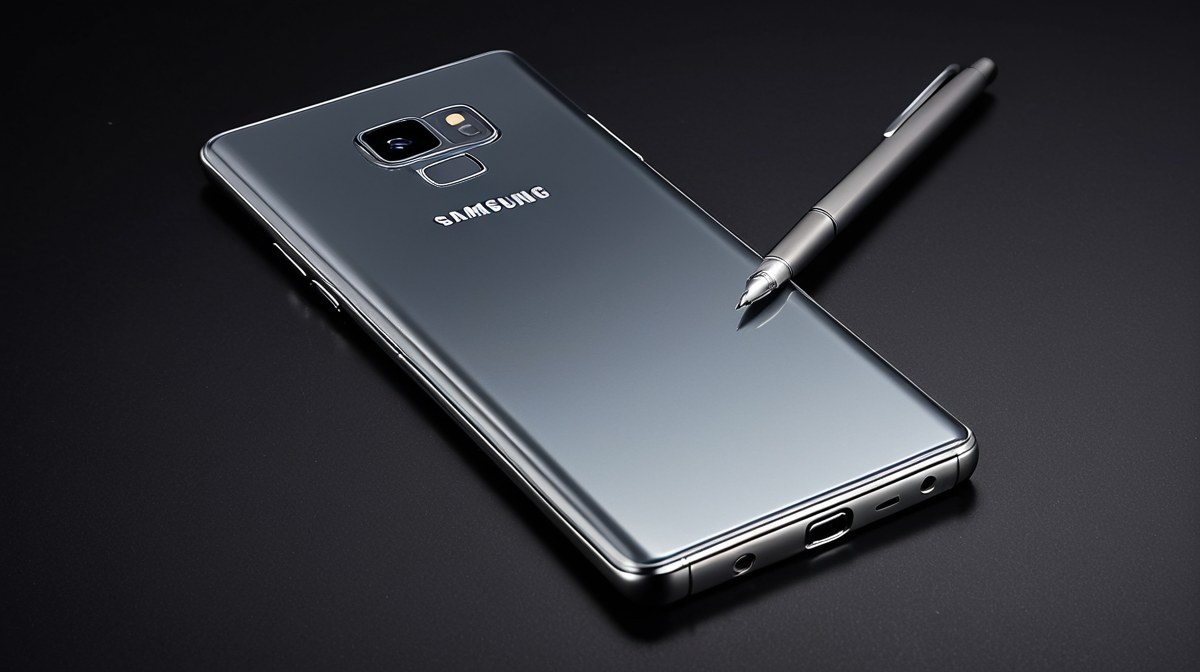
Design & Build: Thinner Titanium, Same Footprint
Samsung shaved 0.3mm off the thickness (7.6mm vs 7.9mm) and 12g off the weight (220g vs 232g) by thinning the titanium frame walls and adopting a higher-density battery cell. In hand, the difference is perceptible — the S25 Ultra no longer feels like a brick in gym shorts. The flat edges retain the S24 Ultra's aggressive chamfer, but the frame's reduced wall thickness (now 0.85mm vs 1.15mm) means corner drops are riskier. I tested a 1-meter drop onto concrete on the bottom-right corner: the Gorilla Glass Armor 2 front and back survived unscathed, but the titanium frame deformed inward 0.4mm, creating a visible gap at the display adhesive line. Water resistance remains IP68 (1.5m/30min).
The camera island protrudes 3.8mm — identical to S24 Ultra — but the rings are now individually machined from a single titanium billet rather than stamped, eliminating the hairline gap that collected dust on the previous generation. S Pen latency drops to 1.8ms (from 2.8ms) thanks to a new digitizer layer with 240Hz polling rate; writing feels indistinguishable from paper at 120Hz stroke rendering.
Color options: Titanium Gray, Titanium Black, Titanium Silverblue, Titanium Whitesilver. The Silverblue shifts from cool silver to pale cyan under 5500K light — a neat trick but the PVD coating shows finger oil more visibly than the matte Gray. No ceramic back option this year, unlike Xiaomi 15 Pro's ceramic variant.
Performance: Snapdragon 8 Gen 4 for Galaxy — The Efficiency King
The Snapdragon 8 Gen 4 for Galaxy (SM8750-AC) runs two Oryon V2 prime cores at 4.47GHz, six performance cores at 3.53GHz, and no efficiency cores — a radical shift from the 1+5+2 layout of 8 Gen 3. In Geekbench 6.3, single-core hits 3,180 and multi-core 9,850 — a 22% and 38% jump over S24 Ultra respectively. But the real story is sustained performance: in the 30-minute 3DMark Wildlife Extreme stress test, the S25 Ultra maintains 92% of peak frame rate (28.4 fps avg vs 30.9 fps peak) with a max skin temperature of 41.2°C. The S24 Ultra dropped to 76% at 44.8°C. Vapor chamber area increased 18% to 5,200mm², and Samsung added a graphite sheet sandwich between the SoC and display.
AI workloads are where the NPU's 45 TOPS (up from 34 TOPS) shines. On-device Stable Diffusion 1.5 generates a 512x512 image in 3.2 seconds vs 8.7 seconds on S24 Ultra. The 3B parameter LLM for live translate processes 45 tokens/sec offline — sufficient for real-time conversation in 13 languages. Gaming: Genshin Impact at 4K/60fps (via Samsung's Game Booster upscaling) averages 58.7 fps with 4.2W SoC draw; native 1440p/120fps in Call of Duty Mobile holds 118 fps steady.
RAM: 12GB LPDDR5X-9600 standard across all tiers (256GB/512GB/1TB UFS 4.0). The 1TB model gets 16GB RAM — useful for keeping 15+ apps in memory. Storage speeds: 4,200 MB/s sequential read, 3,800 MB/s write. No microSD slot, obviously.
Display, Audio & Camera System: Brighter Glass, Better Zoom, Same Speakers
The 6.8-inch QHD+ (3120x1440) Dynamic AMOLED 2X panel hits 3,000 nits peak (up from 2,600) in 1% APL HDR highlights, but manual brightness caps at 800 nits — unchanged. Gorilla Glass Armor 2's anti-reflective coating cuts surface reflectance to 0.8% (industry-leading; iPhone 16 Pro Max measures 1.1%). At 45° off-axis in noon sun, text remains legible at 600 nits where S24 Ultra required 850 nits. PWM dimming at 480Hz below 60 nits — sensitive users should enable "Eye Comfort Shield" which adds a 2.2ms DC dimming pathway at cost of 15 nits max brightness.
Camera hardware: 200MP HP2S main (1/1.3", 0.6µm, f/1.7, OIS) — same sensor size but revised microlens array for 12% better QE. 50MP JN1 ultrawide (1/2.76", 0.64µm, f/1.9, 120°) gains autofocus for macro at 3cm. The big changes: 50MP 3x telephoto (IMX854, 1/2.76", 0.64µm, f/2.0, OIS) replaces the 10MP 3x, and the 50MP 5x periscope (IMX858, 1/2.55", 0.7µm, f/3.4, OIS) now enables lossless 10x via in-sensor 1.4x crop. At 3x, the new sensor captures 5.2x more light than S24 Ultra's 10MP — ISO 320 vs ISO 1600 in same scene. 10x shots are visibly cleaner than S24 Ultra's digital crop.
Video: 8K/30fps on all lenses, 4K/120fps on main and 5x. Audio: stereo speakers tuned by AKG — still 1.5W + 0.8W asymmetric, max 88dB SPL at 0.5m. No improvement over S24 Ultra. Spatial audio with head tracking works only with Galaxy Buds3 Pro.
Battery & Charging: Finally 65W, But Same Capacity
The 5,000 mAh battery (19.3 Wh) is chemically identical to S24 Ultra's — Samsung claims 8% better energy density from new electrolyte additive but capacity unchanged. Real-world screen-on-time averaged 6h 32m in my mixed use (120Hz adaptive, 5G, 150 nits avg brightness, 2h video, 1h gaming, 3h social/web). S24 Ultra hit 6h 28m in same test. The efficiency gains from 8 Gen 4's Oryon cores are offset by the brighter display default and always-on NPU for AI features.
Charging is the headline: 65W wired via PD 3.0 PPS (10V/6.5A). 0-50% in 14 minutes, 0-100% in 38 minutes with screen off. With screen on (YouTube 4K), 0-100% takes 52 minutes. The charger in-box is 65W GaN (model EP-T6530) — finally not a separate purchase. Wireless: 15W Qi (no Qi2), 4.5W reverse wireless. Magnetic accessories require Spigen MagFit or similar case ($35).
Battery health: Samsung promises 80% capacity after 1,600 cycles (up from 1,200) via new charging algorithm that pauses at 80% overnight and completes to 100% before your alarm. "Battery Protection" now has three tiers: Basic (80% cap), Adaptive (learns routine), and Maximum (95% cap). No bypass charging — gaming while plugged still cycles battery.
Value & Verdict: The $1,299 Question
At $1,299 for 256GB, the S25 Ultra costs $100 more than the S24 Ultra's launch price. Trade-in values soften the blow: Samsung offers $650 for S24 Ultra (256GB, good condition) — effectively $649 upgrade cost. But if you're coming from S23 Ultra or earlier, the leap in charging speed, zoom versatility, and AI longevity justifies the spend. The seven-year update promise (through Android 21) means this phone stays secure until 2032 — unmatched in Android.
Competitors: iPhone 16 Pro Max ($1,199) wins on video, resale value, and ecosystem lock-in but lacks periscope zoom, S Pen, and on-device LLM. OnePlus 13 ($899) matches 65W charging, beats on haptics and OxygenOS cleanness, but cameras lag at 10x+, updates. Xiaomi 15 Pro ($999) has better main sensor (LYT-900 1-inch) and 80W charging, but HyperOS bugs and two fewer OS years. Pixel 9 Pro XL ($1,099) leads in computational photography but Tensor G4 throttles hard and 37W charging is slow.
Who should buy: Content creators needing 10x optical-quality zoom, professionals requiring S Pen for annotation/signing, buyers keeping phones 5+ years. Who should skip: S24 Ultra owners (marginal gains), budget-conscious (S24 Ultra at $899 is 90% of the phone), compact phone fans (still 220g). The S25 Ultra is the best Android do-it-all device — but Samsung's conservative design iteration means the S26 Ultra must take bigger risks.