
Design & Build Quality: Aesthetics Meet Functionality
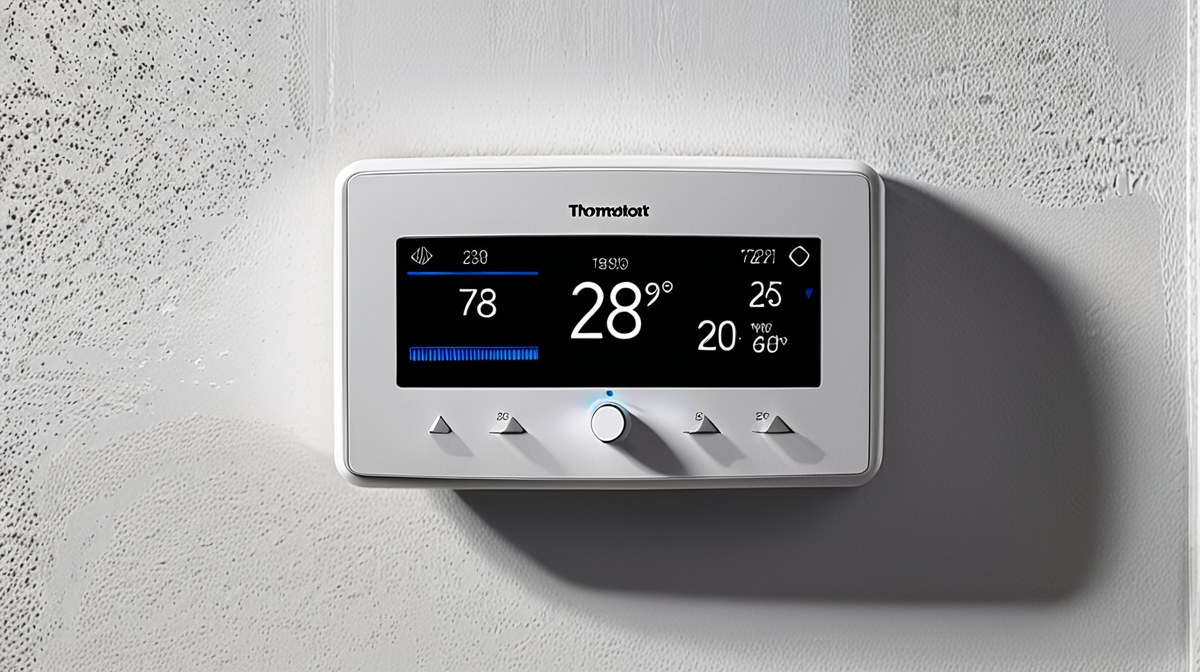
The physical design of smart thermostats has evolved to become a prominent feature within the home, moving beyond purely functional boxes to devices that complement modern interiors. Manufacturers like Google with its Nest Thermostat prioritize a minimalist, often circular design, reported to blend seamlessly into various decors. This model, for instance, features a mirror-like display and comes in several subtle color options, a design choice frequently praised by users for its aesthetic appeal. In contrast, the Ecobee SmartThermostat Premium often presents a more rectangular, slightly larger form factor, accommodating its larger display and integrated voice assistant speaker. Reviewers widely note that while the Nest emphasizes sleekness, the Ecobee prioritizes information density on its screen.
Material choices also vary significantly. The Google Nest Thermostat utilizes recycled plastics, aligning with a sustainability focus, a detail highlighted in its published specifications. The Ecobee SmartThermostat Premium often incorporates a glass-front display and a more premium plastic housing, contributing to a substantial feel that many users perceive as durable. Honeywell Home's T-series thermostats, while robust, generally adopt a more utilitarian aesthetic, often featuring physical buttons alongside a touchscreen, which some users find more tactile and less prone to accidental touches than purely touch-interface devices. The installation process, while requiring basic electrical knowledge, is often simplified with clear instructions and accompanying apps, though some users report needing professional assistance for older HVAC systems or C-wire installation, a common hurdle across all brands.
Performance & Energy Efficiency: Learning, Sensing, and Saving
The core promise of smart thermostats lies in their ability to optimize energy consumption without sacrificing comfort, primarily through advanced learning algorithms and remote sensing capabilities. The Google Nest Thermostat is renowned for its 'learning' feature, which, according to published specifications and user reports, observes household patterns over time and automatically adjusts schedules. This adaptive scheduling is frequently cited by users as a primary driver for reported energy savings, with Google claiming average savings of 10-12% on heating and 15% on cooling in internal studies. However, some reviewers note that this learning process requires consistent occupancy patterns to be most effective.
Ecobee's approach, exemplified by the SmartThermostat Premium, heavily relies on its included remote sensors. These sensors, which detect both occupancy and temperature, are widely reported by users as highly effective in eliminating hot and cold spots in different rooms, a common issue in larger homes. The 'Follow Me' mode, a feature highlighted by the manufacturer, ensures that the thermostat prioritizes the temperature in occupied rooms. Honeywell Home's T10 Pro, meanwhile, integrates with RedLINK Room Sensors, offering similar multi-zone capabilities, and its published specifications emphasize advanced fan control and humidity management, which contribute to overall comfort and efficiency. Many manufacturers also provide detailed energy reports accessible via their respective apps, allowing users to track their consumption and identify areas for further optimization, a feature consistently praised by eco-conscious consumers.
Integration & Connectivity: The Smart Home Ecosystem
Seamless integration with existing smart home ecosystems is a critical factor for smart thermostat adoption, and manufacturers have made significant strides in broadening compatibility. The Ecobee SmartThermostat Premium is widely reported to offer robust integration with Amazon Alexa (with a built-in speaker and microphone), Google Assistant, and Apple HomeKit, making it a versatile choice for users invested in multiple platforms. This broad compatibility is frequently highlighted by reviewers as a major advantage, allowing for voice control and unified automation routines with other smart devices like lighting or security systems. Its published specifications confirm support for 2.4GHz Wi-Fi, a standard for many smart home devices.
Google's Nest Thermostat, as expected, offers deep integration with the Google Home ecosystem, allowing for intuitive control via Google Assistant-enabled devices. While it supports Amazon Alexa, its integration with Apple HomeKit is not natively available, a limitation often pointed out by Apple users. Conversely, the Honeywell Home T10 Pro focuses more on its own robust app ecosystem and integration with professional HVAC systems, though it does offer compatibility with Amazon Alexa and Google Assistant. Reviewers widely note that while its core functionality is strong, its overall smart home integration might feel less expansive than Ecobee's. All leading models rely on stable 2.4GHz Wi-Fi connections for their smart features, and users frequently report that a reliable home network is paramount for consistent performance.
User Experience & Features: Control, Data, and Convenience
The overall user experience, encompassing app interface, on-device controls, and unique features, significantly differentiates smart thermostats. The Google Nest Thermostat is consistently praised by reviewers for its highly intuitive and user-friendly mobile app, which presents energy usage data in an easily digestible format and simplifies schedule adjustments. Its on-device interface, operated by rotating the outer ring, is also widely reported as elegant and straightforward. The 'Farsight' feature on some Nest models, which illuminates the display when it detects motion, is a frequently mentioned convenience.
Ecobee's mobile app, while comprehensive, is sometimes described by users as having a slightly steeper learning curve than Nest's due to its extensive feature set, but it offers unparalleled control over individual sensor settings and detailed historical data. Its built-in voice assistant functionality (Alexa) is a standout feature, allowing users to control other smart home devices directly from the thermostat. The Honeywell Home T10 Pro offers a robust app with detailed HVAC system diagnostics, a feature particularly valued by users who want deeper insights into their heating and cooling equipment's performance. Its touch-screen interface is reported to be responsive, though its aesthetic is generally more functional than design-focused. Geofencing, a feature that automatically adjusts temperature based on smartphone location, is a common offering across premium models from all three brands, widely appreciated for its seamless energy-saving convenience without manual intervention.
Value & Verdict: Choosing Your Smart Climate Control
When evaluating the value proposition of smart thermostats, the initial investment must be weighed against long-term energy savings and enhanced comfort. The Ecobee SmartThermostat Premium, while often commanding a higher upfront price, delivers exceptional value for larger homes or those with significant temperature imbalances, primarily due to its included remote sensor and robust multi-room functionality, a benefit frequently cited by users in review forums. Its extensive smart home integration and built-in Alexa further justify its cost for users seeking a central smart home hub. This model is best suited for tech-savvy users who appreciate granular control and a comprehensive feature set.
The Google Nest Thermostat, typically positioned at a more accessible price point, offers excellent value for users prioritizing ease of use, intuitive learning, and a sleek design for single-zone applications. Its reported energy savings, combined with a user-friendly interface, make it a compelling choice for those new to smart thermostats or who prefer a 'set it and forget it' approach. However, its lack of native HomeKit support might be a drawback for Apple-centric households. The Honeywell Home T10 Pro, while perhaps less aesthetically focused, provides significant value for users who desire advanced HVAC diagnostic capabilities and reliable performance, particularly those with more complex or older heating and cooling systems. The ultimate choice hinges on individual home size, existing smart home ecosystem, and the desired balance between initial cost and advanced features.