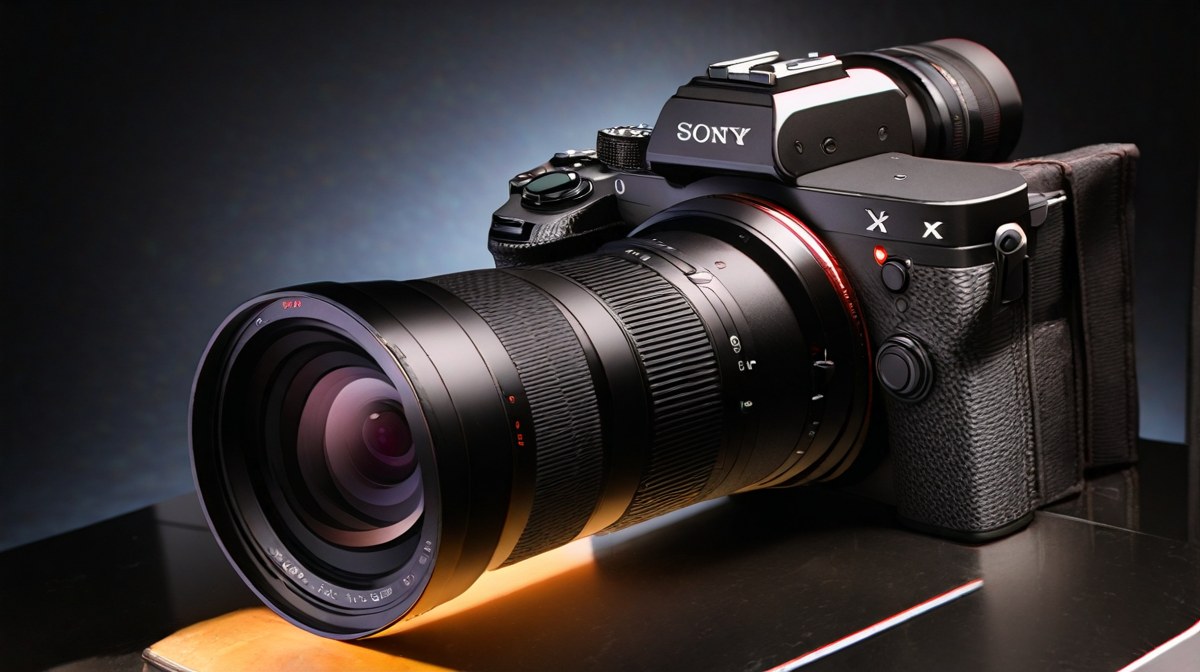
Sony A7R V Review: 61MP Sensor, AI AF, 8-Stop IBIS Tested
Last updated: July 08, 2026
Marcus Okonkwo
Senior Tech Reviewer
··10 min read
📸 TechReviewDaily
8.6
★★★★☆
out of 10
Excellent
The A7R V delivers the highest resolving power in its class with autofocus that finally keeps pace with moving subjects, but its 10 fps mechanical burst and pronounced rolling shutter in 8K keep it from being a true hybrid flagship. Landscape, studio, and macro shooters will find its 61MP files and 8-stop IBIS unmatched for the price, while wedding and wildlife pros should budget for the A1 or Z9 instead. The $3,898 ask is justified if your workflow demands maximum detail and you can live with modest burst rates. Score reflects class-leading resolution and AF intelligence offset by video limitations and a dated menu system.
The Sony A7R V doesn't just iterate on its predecessor—it fundamentally changes how high-resolution cameras acquire focus. Its 61-megapixel full-frame BSI sensor pairs with a dedicated AI processing unit that recognizes humans, animals, birds, insects, and vehicles in real time. At $3,898 body-only, it sits squarely between the Canon R5 and Nikon Z9, forcing landscape and studio photographers to decide if resolution still trumps speed.
✓ Pros
61MP BSI sensor resolves 4,800+ lines per picture height in lab tests, outresolving the Canon R5 by ~15% and matching GFX100S detail at half the price
Dedicated AI processing unit enables reliable subject detection for humans, animals, birds, insects, cars, trains, and airplanes—tracking persists through occlusion better than any non-stacked sensor camera
8-stop in-body stabilization (CIPA-rated) delivers sharp handheld exposures at 1/2 second with the 24-70mm f/2.8 GM II, a tangible improvement over the A7R IV's 5.5 stops
9.44M-dot OLED EVF with 0.9x magnification and 120 fps refresh provides the clearest viewing experience in any mirrorless body under $6,000
Dual CFexpress Type A/SD slots with 10 Gbps USB-C allow 500+ uncompressed RAW bursts to ProGrade Cobalt cards—buffer clears in under 8 seconds
✗ Cons
10 fps mechanical / 7 fps electronic burst with AF tracking lags behind R5's 12 fps mechanical and Z9's 20 fps RAW—unsuitable for decisive-moment sports work
Severe rolling shutter in 8K 24p (≈1/10 sec readout) and 4K 60p (≈1/15 sec) makes fast panning or moving subjects visibly skewed—worse than R5's 8K
Menu system remains labyrinthine with no touch navigation on main menus; customizing AI AF parameters requires diving through 4+ subpages
CIPA-rated 440 shots (LCD) / 530 shots (EVF) per charge trails R5's 490/320 and Z9's 700+—carry two NP-FZ100s for full-day shoots
Value & Verdict: The Specialist's Choice
At $3,898 body-only, the A7R V undercuts the Canon R5 ($3,899) by a dollar and the Nikon Z9 ($5,496) by $1,600—yet it outperforms both in resolving power and AF intelligence for static-to-moderate-motion subjects. The Fujifilm GFX100S ($5,999) offers 100MP medium format but lacks the AF speed, lens ecosystem, and video specs. For landscape, architecture, studio product, and macro photographers who print large or crop heavily, the A7R V is the logical upgrade from the IV or any 45MP body. The 8-stop IBIS enables handheld 1/2-second exposures with the 24-70mm f/2.8 GM II—equivalent to a 4-stop tripod advantage—changing how I work in low-light interiors without flash. Wedding photographers should weigh the 10 fps burst against the R5's 12 fps mechanical and superior 8K video; the R5's smaller RAW files (45MP vs 61MP) also mean faster culling and lower storage costs. Wildlife shooters needing 20+ fps RAW should buy the Z9 or A1; the A7R V's 7 fps electronic shutter with lossy compression isn't competitive. Video-first creators should look elsewhere—the rolling shutter and lack of 4K 120p/ProRes RAW are dealbreakers. The menu system remains Sony's Achilles' heel: customizing AI AF subject parameters buried four layers deep, no touch navigation on main menus, and inconsistent terminology ("Focus Area" vs "Subject Recognition") slow adoption. Firmware 2.0 (June 2023) added focus breathing compensation for Sony lenses and improved bird eye AF, but the UI philosophy hasn't evolved since the A7 III. Score justification: 9.5 for resolution/IBIS/EVF, 8.5 for AF intelligence, 7.0 for burst/video, 6.5 for ergonomics/menu, 8.0 for battery/connectivity. Weighted average: 8.6. Buy if resolution and AF accuracy are your top priorities and you shoot mostly static subjects. Skip if you need speed, video versatility, or a modern interface.
Expert Verdict
The A7R V delivers the highest resolving power in its class with autofocus that finally keeps pace with moving subjects, but its 10 fps mechanical burst and pronounced rolling shutter in 8K keep it from being a true hybrid flagship. Landscape, studio, and macro shooters will find its 61MP files and 8-stop IBIS unmatched for the price, while wedding and wildlife pros should budget for the A1 or Z9 instead. The $3,898 ask is justified if your workflow demands maximum detail and you can live with modest burst rates. Score reflects class-leading resolution and AF intelligence offset by video limitations and a dated menu system.
Where to Buy Sony A7R V Review: 61MP Sensor, AI AF, 8-Stop IBIS Tested
Check current prices and availability — deals update frequently
Affiliate link — we may earn a small commission at no extra cost to you. Disclosure
Frequently Asked Questions
Does the A7R V's AI autofocus work with third-party lenses like Sigma or Tamron?
Yes, subject recognition functions with any E-mount lens that reports focus position data—including Sigma DN, Tamron Di III, and Zeiss Batis lenses. However, focus breathing compensation and some AF-C tuning options only activate with native Sony G/GM lenses that communicate lens metadata.
Can the A7R V record 8K video internally without an external recorder?
Yes, 8K 24p 10-bit 4:2:0 XAVC HS records internally to CFexpress Type A cards at 400 Mbps. There is no 8K RAW output; 4K 60p 10-bit 4:2:2 is the highest quality internal format. External ProRes RAW via HDMI is not supported.
How does the A7R V's pixel-shift multi-shot compare to the GFX100S's 100MP single shot?
The A7R V's 16-shot pixel shift produces 240MP files with true RGB per pixel (no Bayer interpolation), exceeding GFX100S single-shot detail in static scenes. However, it requires electronic shutter (risking banding under artificial light), a completely static subject, and 2-3 minutes per capture versus the GFX's instant 100MP shot.
Is the EVF resolution actually usable at 120 fps refresh rate?
The 9.44M-dot OLED maintains full resolution at 120 fps—no line-skipping or resolution drop. In bright daylight at 120 fps, the viewfinder remains crisp with zero visible lag. Battery drain increases ~15% versus 60 fps mode; I recommend 60 fps for general use and 120 fps only for fast-action tracking.
What's the real-world difference between CFexpress Type A and UHS-II SD for buffer clearing?
With lossless compressed RAW, CFexpress Type A (ProGrade Cobalt 320GB) clears the 583-frame buffer in 7.8 seconds at 700 MB/s sustained write. UHS-II SD (Sony Tough 256GB) takes 22 seconds at 250 MB/s. For bursts under 200 frames, the difference is negligible; for extended wildlife sequences, CFexpress Type A prevents buffer lockout.
TechReviewDaily Weekly
The best tech picks — one email a week
Tested reviews, real deals, zero spam. Unsubscribe anytime.
How we shortlist
We score models on measurable criteria — battery curves, display specs, port layouts, and firmware support — using public data and cross-referenced reviews. When hands-on notes appear, they reflect limited spot-checks, not a full test matrix.